 In this area
The Bologna issue
Bolognina, Bologna: the city’s working quarter with a pulse of its own
North of Bologna Centrale, Bolognina trades postcard polish for rail-side realism, serious eating and a neighbourhood life that still feels lived in rather than staged.
By Giulia MonariBologna, plate by plate
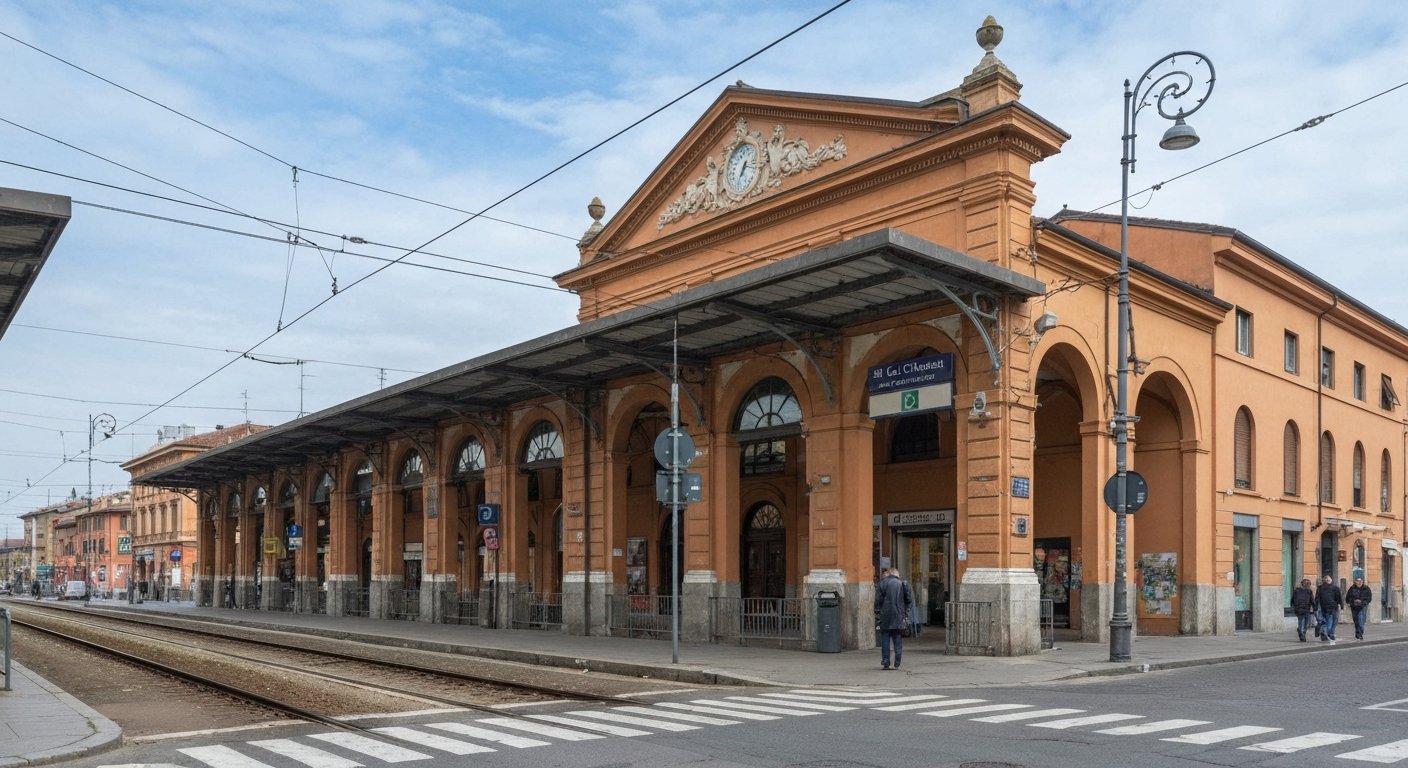
Walk out of Bologna Centrale through the Via de' Carracci exit and the city changes register at once: no parade of porticoes, no terracotta theatre, just Bolognina doing what it has always done — working, eating, moving, remembering. The quarter was built around the railway, and you feel that straight away in the geometry of it: low blocks, long streets, a grid that looks as if it was drawn for people with shifts to catch and trains to meet. Yet this is not some leftover suburb waiting to be improved. It has its own arguments, its own loyalties, its own good places to sit down for lunch and its own way of telling Bologna’s story without ever raising its voice.
What Bolognina is known for
Bolognina’s reputation rests on three things: railways, resistance and reinvention. It grew up in the 1880s around the station workshops, housing the men who built and repaired rolling stock, and later the families who came north from Puglia and Calabria to work in the factories. That origin still matters. The tracks cut the quarter from the centre so decisively that the high-speed station rebuild was really an exercise in stitching the two halves back together. The Via de' Carracci foyer and the Ponte Matteotti footbridge now do that job in a matter of minutes, but the old separation lingers in the mind. Bolognina is close, and not quite crossed over.
It also carries political weight. This is where the partisans fought the Battaglia della Bolognina in the last days of the war, and where, in 1989 and 1990, Achille Occhetto signalled the dissolution of the Italian Communist Party at the local Sferisterio in the act still called the svolta della Bolognina. That history is not wallpaper here; it sits in the grain of the place. You can feel it in the way the neighbourhood keeps changing without pretending that change is effortless. XM24, the self-run social centre on Via Fioravanti, was cleared in 2019. DumBO rose in the old Ravone freight yard. Specialty bakeries, natural-wine bars and phone-repair shops now share blocks with Bangladeshi groceries and Chinese services. This is Bologna with its work clothes still on, and it does not mind being seen that way.
What makes Bolognina compelling for a visitor is not that it imitates the centre badly; it is that it refuses to. The crowd is younger, more international, less interested in posing for the camera. Weekday mornings belong to the market. Summer nights belong to open-air cinema and DJ sets in reclaimed industrial yards. The neighbourhood is not trying to charm you, which is exactly why it does.
Plan your Bologna trip
Live prices from our booking partners.
Guests & rooms
Free cancellation on many rooms. We may earn a commission when you book.
Where to eat & drink
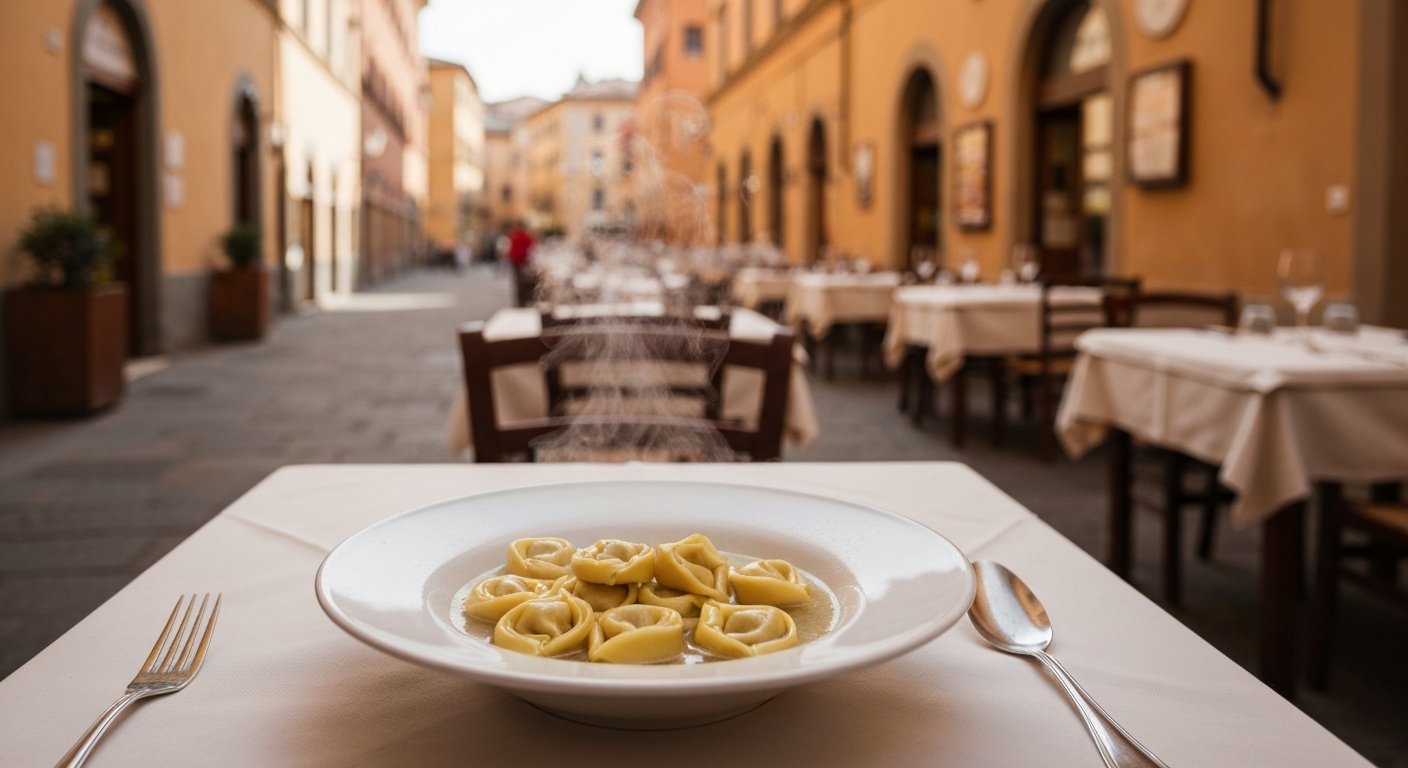
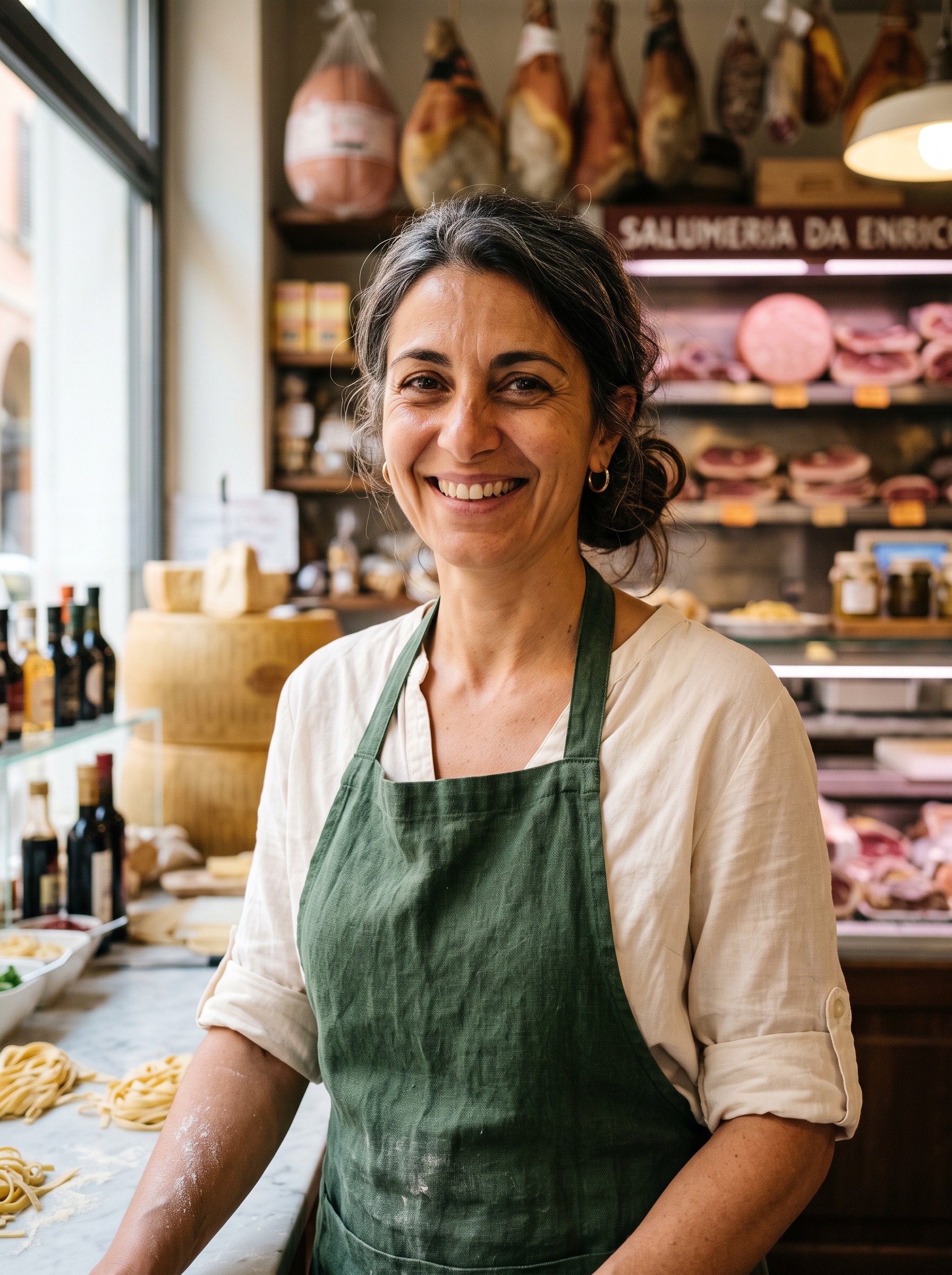
If you come to Bolognina hungry, start with the thing people come here to defend in arguments: Trattoria di Via Serra. It is a small, informal room on Via Luigi Serra with a Michelin Bib Gourmand, and the reason is plain enough on the plate. The tortellini in brodo are benchmark Bologna — tiny, precise, serious — and the tagliatelle al ragù have the sort of steadiness that makes you stop talking for a minute. Book two weeks ahead if you can; the owners are famously reluctant to answer the phone, which is either maddening or reassuring depending on your temperament. Either way, it is the kind of place that reminds you how much of Bologna’s reputation depends on the discipline of a thin sheet of pasta and a broth that has been respected, not rushed.
A few doors along on the same street, Fermento does the neighbourhood’s other daily duty. It is a corner bar with craft beer, natural wine and cocktails, open from late morning, with a lively pavement crowd that settles in as the day loosens. This is not a place for grand declarations. It is where you stop for one glass and stay for two because the street is active, the room is easy, and the mood is exactly right for Bolognina’s unshowy confidence. If you want to understand the quarter’s present tense, stand here and watch who comes and goes: people from the market, people from work, people who live nearby and know they do not need to cross the tracks for a decent drink.
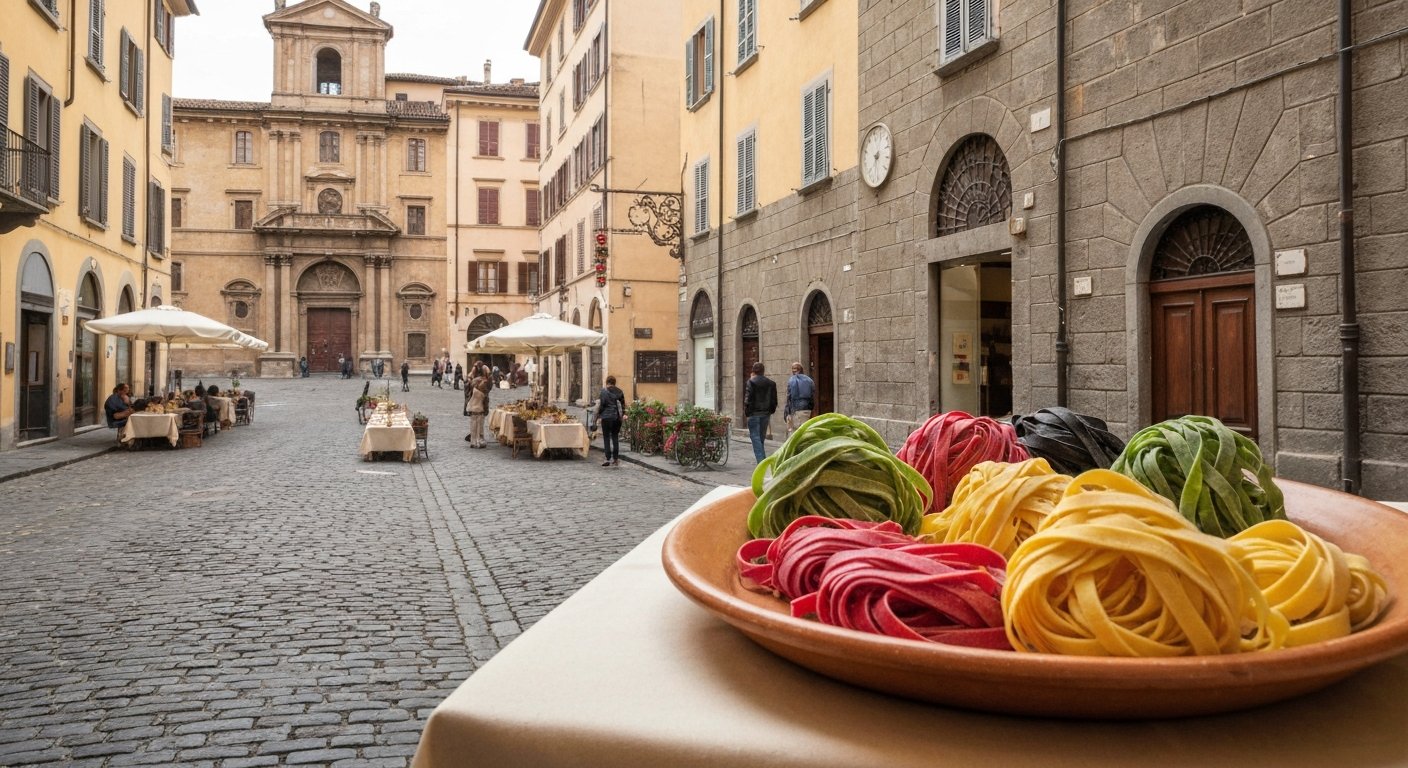
For a newer kind of Bolognese pasta language, I Mattarelli is the move. They roll fresh pasta by hand with the mattarello and colour it with spinach, beetroot, turmeric and squid ink, which sounds playful until you taste how carefully it is done. In summer, the tables sit in a condominium courtyard; in winter, there is a small osteria at Via Serlio corner Via Raimondi. It is exactly the sort of place that would be unbearable if it were trying to be clever. Instead it is precise, modern and still rooted in the old craft. Prices across these places sit below the centre’s, which is one of Bolognina’s quiet advantages: you can eat very well here without paying for the privilege of proximity to a postcard.
Going out
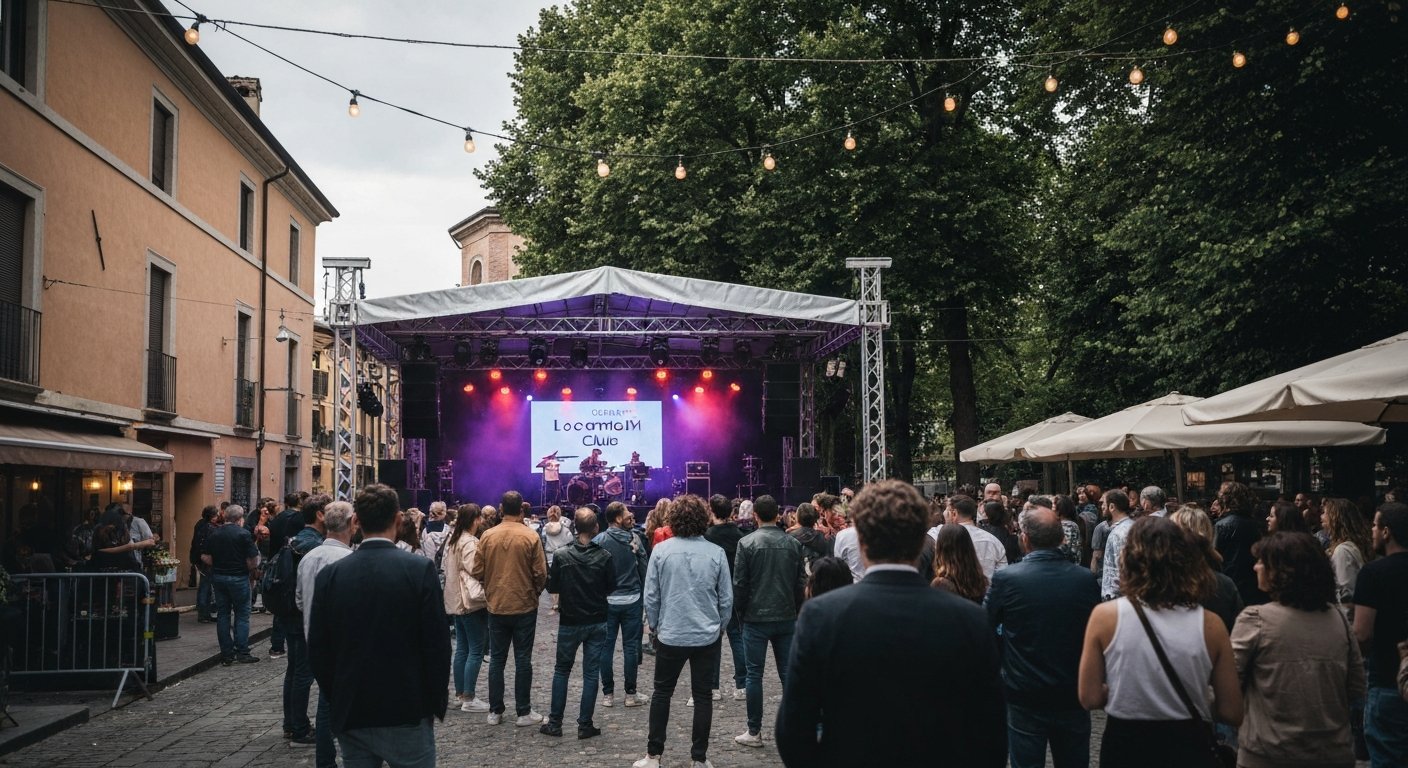
Bolognina’s nights are music-first and unpretentious. The anchor is Locomotiv Club, opened in 2007 inside a converted bocce court in the Dopolavoro Ferroviario park on Via Sebastiano Serlio. It is intimate in the best sense: a room where you stand close enough to read the setlist taped to the stage, and where the history of the place is measured in more than 500 gigs. Swans and Melvins have played here, as have Four Tet and Caribou, alongside club nights and jazz. You need the AICS membership card, because Italy still likes its rituals, even for a gig. Locomotiv is the sort of venue that gives a neighbourhood a pulse after dark without turning it into a scene.
In the warm months, the centre of gravity shifts to DumBO in the old Ravone freight yard on Via Casarini. DumBO Summertime runs roughly from April to October with concerts, DJ sets, street food and a weekly farmers’ market, all under strung lights across reclaimed industrial space. The effect is not polished, and that is the point. The yard keeps its freight-yard scale, but the atmosphere belongs to people who want to be outside, listening, eating and moving through a place that has been repurposed rather than prettified. If Bolognina has a contemporary calling card, this is it: a neighbourhood that can turn an industrial leftover into a living room without pretending it was ever meant to be one.
The rest of the going-out scene is lower-key and local — natural-wine bars like Fermento, osterie around the market, a crowd that prefers conversation to velvet rope. If you want high-volume small-hours dancing, you are better off across the tracks. Bolognina keeps its nights more like the neighbourhood it is: busy enough to feel alive, calm enough to hear yourself think.
Things to do / what to see
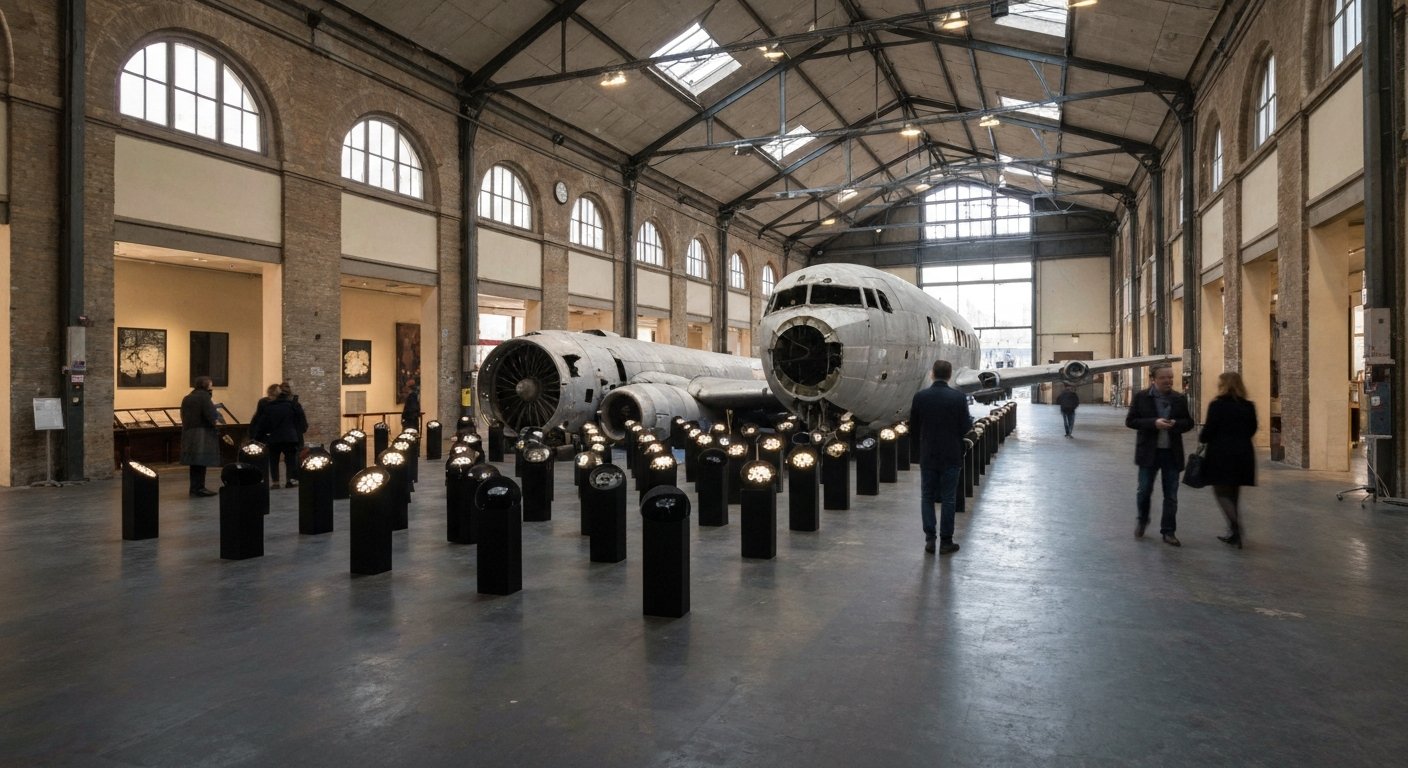
The one unmissable sight is the Museo per la Memoria di Ustica on Via di Saliceto, set inside a former ATC tram depot. Christian Boltanski’s permanent installation surrounds the reconstructed wreck of the Itavia DC-9 shot down over the sea near Ustica on 27 June 1980, with 81 pulsing lights breathing over 81 black mirrors for the 81 dead. Admission is free. It opens Thursday and Friday mornings and all day Saturday and Sunday. It is one of the most affecting rooms in the city, and it asks for nothing except your attention. There are places that explain a city and places that trouble it; this does both.
In summer, the ritual is cinema under the stars. Arena Puccini, curated by the Cineteca di Bologna, normally runs from mid-June to early September at the Dopolavoro Ferroviario on Via Serlio, though for 2026 it has decamped to the Arcoveggio racecourse while the DLF is renovated. That temporary move says something useful about the neighbourhood: even its pleasures are tied to work, repair and reuse. Cinema here is not a velvet-seat fantasy; it is a seasonal habit, a way of gathering under the open sky in a part of the city that has always been practical about how people share space.
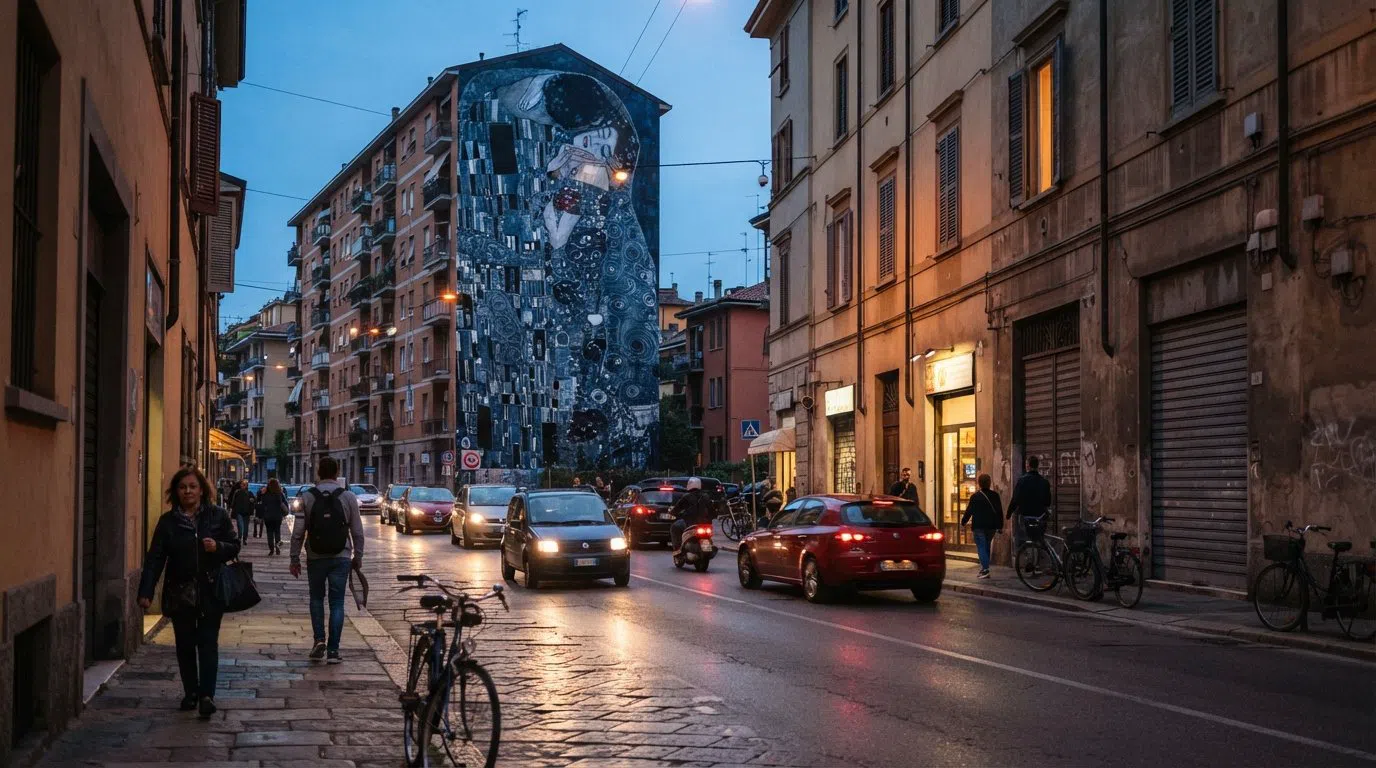
Then there is the street art, which Bolognina wears with less irony than some places and more conviction than others. Blu’s monumental The Kiss on Via Aristotile Fioravanti is the image people often remember first, and the big commissioned walls scattered towards Via Colonna reward a slow wander. Add an hour poking around DumBO and you begin to understand the neighbourhood as a layered thing: railway quarter, political quarter, migrant quarter, cultural quarter. Not separate identities, just different tempos of the same place.
Don’t miss in Bolognina
Mercato Albani for local produce and evening drinks
Striking street art murals
Trattoria di Via Serra
Shopping & markets
The heart of Bolognina shopping is Mercato Albani, a covered market on the pedestrian stretch of Via Francesco Albani that has been feeding the quarter since 1934. It is exactly the sort of market a neighbourhood trusts with its ordinary life: greengrocers, butchers, a fishmonger, cheese and deli counters, florists, roughly three dozen businesses in all. Regulars know the stallholders by name, which is the real sign that a market still works. Standard hours are Tuesday to Saturday mornings, and it is worth going early for the best produce. It has also slowly stretched into the evenings, with a handful of eating-and-drinking spots that make it more than a shopping errand.
Inside the market, Zem Market opened in October 2025 and brings organic, vegetarian, zero-kilometre street food to the mix. Tigelle, crescentine and vegetable snacks make it a useful stop for a market lunch or an alternative aperitivo, especially if you want to stay in the orbit of the stalls rather than drift off to a restaurant table. It is a small addition, but a telling one: Bolognina’s market life is no museum piece. It keeps absorbing new habits.
For bread and coffee, Forno Brisa’s Bolognina spaccio e lab on Via Nicolò dall’Arca, right beside its production bakery, turns out naturally leavened loaves and specialty espresso, and cheerfully sells its “brutti ma buoni” — slightly overbaked bread and imperfect sweets — at a discount. I have a soft spot for places that understand that good bread does not need to be beautiful to be right. This one does. It belongs to a neighbourhood where the practical and the exact can still live in the same room.
Beyond food, the everyday shopping runs to Via di Corticella’s mix of hardware stores, ethnic groceries and neighbourhood cafes rather than boutiques, which is precisely the point. Bolognina shops like a place that expects people to actually cook, fix, refill and repeat.
Where to stay in Bolognina
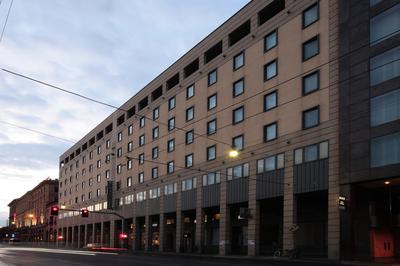
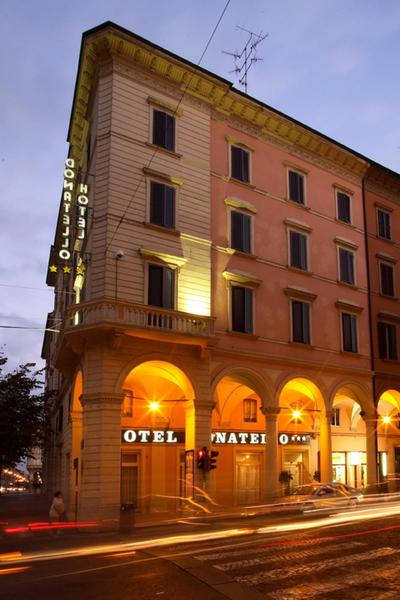
Bolognina suits a particular traveller: someone who values a short walk to the platforms and a lower nightly rate over a view of the towers. Rooms cluster in the residential grid just north of the station, and the closer you are to the Via de' Carracci exit and the Ponte Matteotti footbridge, the faster your hop back into the centre. The stock skews to B&Bs, guesthouses, apartments and small independent hotels rather than big international flags, and the price feel sits comfortably below the historic core for the same star rating.
For the best of the neighbourhood, aim for the pocket around Via Luigi Serra and Mercato Albani, where you can eat and drink well within a few blocks, or the streets near the Dopolavoro Ferroviario park off Via Serlio if live music and summer cinema are your reason for coming. Light sleepers should check which side of the tracks and which floor a room faces, since the station and its approaches are busy around the clock and some blocks sit close to the rail cutting. If your trip is mostly monuments, museums and the evening passeggiata around Piazza Maggiore, you may honestly prefer to stay south; if it is trains, food and value, Bolognina earns its keep and then some.
Hotels in Bolognina
Our best-rated stays in this neighbourhood. Prices are approximate “from” rates — confirmed at the provider when you continue. We may earn a commission if you book through our partners — at no extra cost to you.
In this area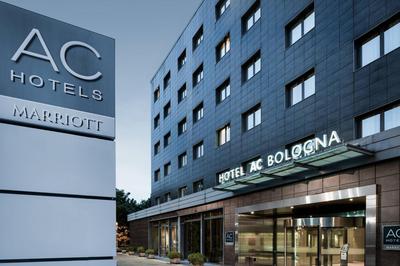 In this area
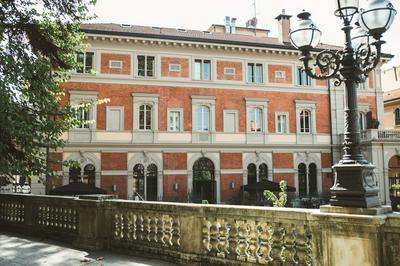 In this area
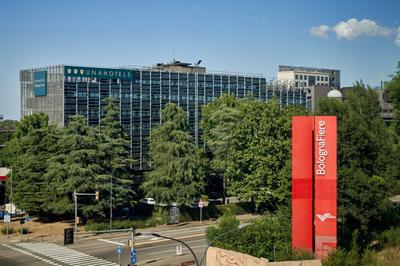 In this area
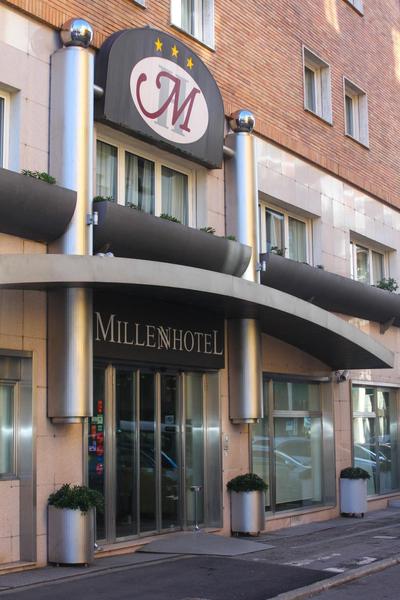 In this area
 In this area
Getting around
Bolognina begins directly behind Bologna Centrale, and the station is the whole trick to it. The Via de' Carracci exit and the Ponte Matteotti pedestrian bridge drop you straight into the quarter, putting the heart of Bolognina roughly a 10-to-15-minute walk from the main hall and platforms, and Emilia-Romagna’s whole rail network, from Modena and Parma to Ferrara and Ravenna, on your doorstep for day trips.
On foot the grid is flat and easy, if less charmed than the porticoed centre, and Piazza Maggiore is about a 20-minute walk south. Buses fill the gaps: TPER line 27 runs up through the district towards Corticella, and a long-planned tram line is designed to serve exactly this Centrale-to-Bolognina corridor in the coming years. For Bologna Marconi airport, the quickest link is the Marconi Express monorail from Bologna Centrale, about seven minutes end to end, which makes Bolognina one of the most airport-convenient places to sleep in the whole city.
Bolognina is not the Bologna of souvenir postcards, and thank goodness. It is a neighbourhood with its sleeves rolled up, where the market still matters, the music venues are real rooms rather than branding exercises, and the pasta is judged by the same old Emilian standards that made the city famous in the first place. You come here for trains, for value, for a sense of Bologna that has not been polished into submission. You stay, if you have any sense, because the place has enough life in it to make you forget you crossed the tracks at all.
Gallery
Bolognina in pictures
Bolognina — your questions
Is Bolognina a good area to stay in Bologna?
Yes, if your priorities are trains, food and value rather than being among the towers. It sits directly behind Bologna Centrale, so it is ideal for early departures and day trips around Emilia-Romagna, and rooms are generally cheaper than in the historic centre. If you mainly want Piazza Maggiore and the porticoes on your doorstep, you may prefer to stay south of the tracks.
Is Bolognina safe?
It is a normal, lively working-class and multi-ethnic quarter that is generally safe to walk day and night, with the usual big-city common sense around the station and on quieter side streets late at night. It feels grittier and plainer than the polished centre, but that is character, not danger.
What is Bolognina best known for?
Its railway and working-class roots, its Resistance and political history, and its current reinvention through places like DumBO and Locomotiv. For visitors, the big draws are Mercato Albani, Trattoria di Via Serra, street art and the Museo per la Memoria di Ustica.
What should I do first in Bolognina?
Start with Mercato Albani for a morning browse, book a meal at Trattoria di Via Serra if you can, and make time for the Museo per la Memoria di Ustica. If you are there in summer, add DumBO or Arena Puccini after dark.