
Bologna keeps its water where you'd least expect it: behind a shuttered window in a courtyard wall, under a drain grate two streets from the university, and along a green towpath that runs north into the Bolognina, long after the tour groups have turned back for the Two Towers. For six centuries a network of canals fed the city's silk mills, moved grain, and floated goods out toward the Adriatic. Then, through the twentieth century, Bologna paved over almost all of it. What survives, above ground and below, is scattered and unmarked enough that most visitors leave the city without knowing it was ever there.
Street-level traces anyone can find in an afternoon
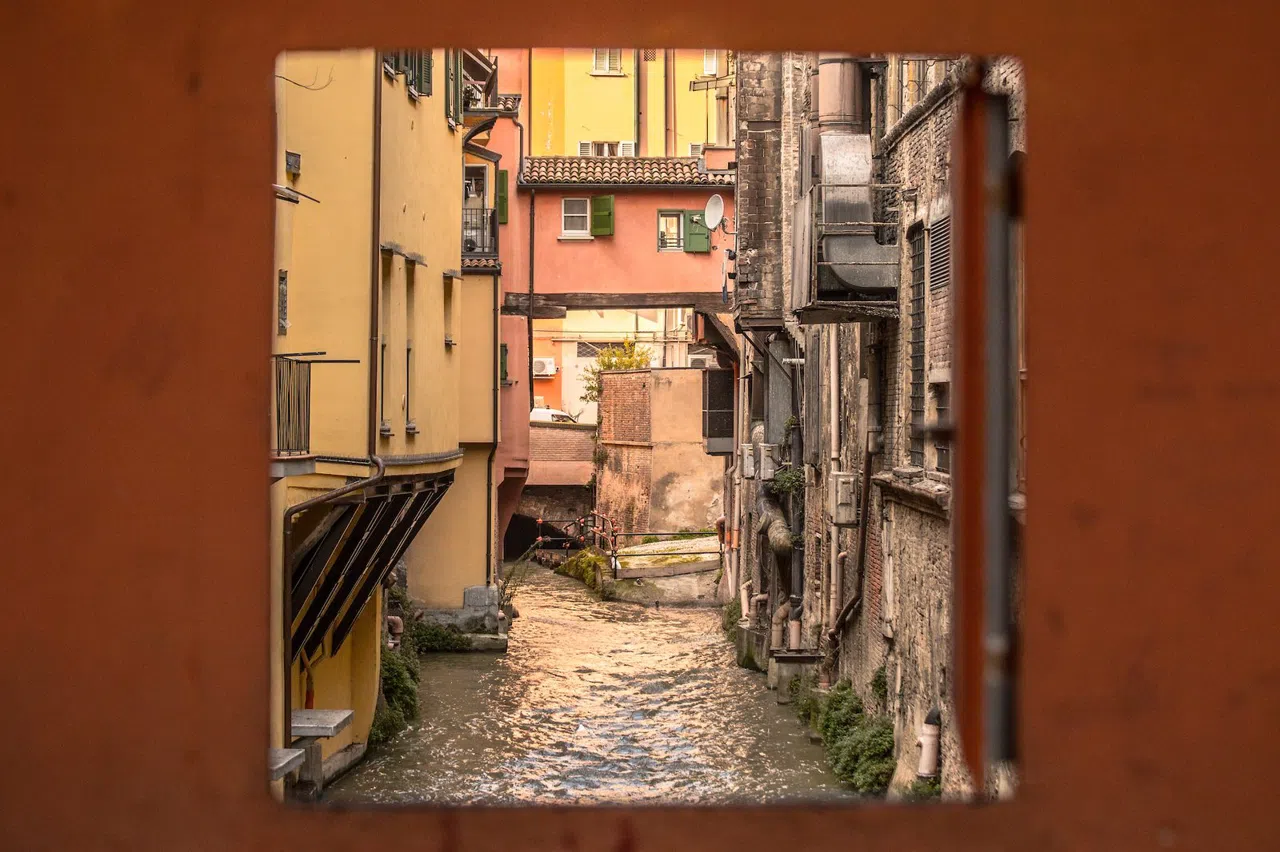
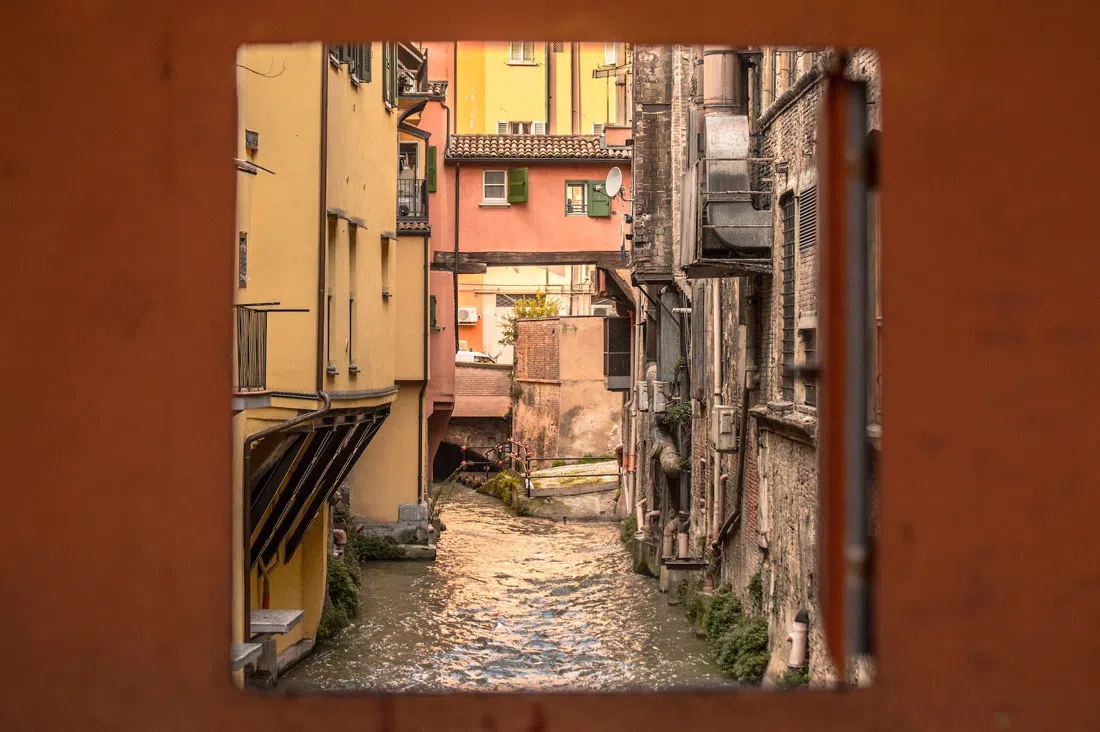
Start at the Finestrella di Via Piella (university quarter, just off Via delle Moline), a small window cut into a courtyard wall that frames the only stretch of the Canale delle Moline left uncovered in the historic centre: a narrow channel running below old brick houses that makes the whole street feel, for a moment, like a different kind of city than the one queuing behind you. It's the single most photographed 'lost canal' shot in Bologna, and for good reason: nowhere else does the buried network resurface this cleanly. The catch is that everyone else has the same photograph in mind. The window looks onto a public street, free and open around the clock, but it's a genuine pinch-point (barely a person's width of pavement), and by midday in season a queue forms for the two or three metres where the shot lines up. Go at first light or after dinner instead; the water doesn't care what time it is, and neither should you. It only reopened to view in 1998, after decades sealed behind the wall, worth remembering as you stand there: this glimpse is younger than most of the people queuing for it.
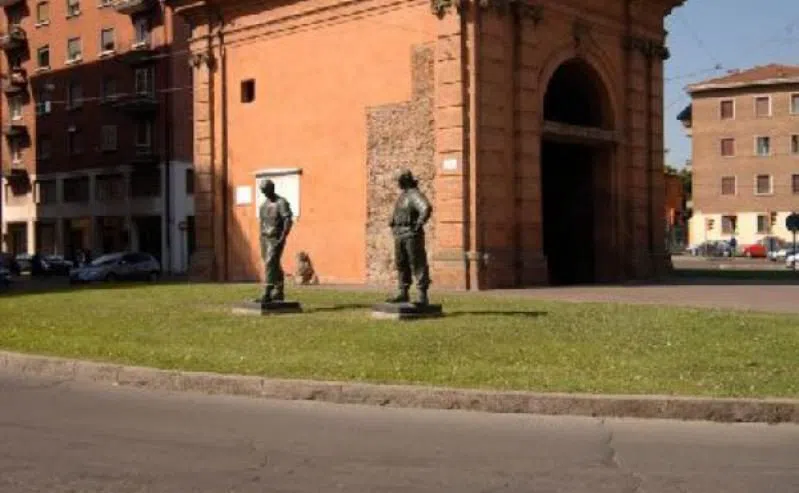
From Via Piella it's a fifteen-minute walk west, skirting the edge of the centro storico, to Porta Lame (western edge of the old walls, near MAMbo), one of the surviving gates in Bologna's medieval ring. The name is the whole point of the stop: 'Lame' is the old word for the marshland the gate once opened onto, before it was drained and channelled into the canal system this piece is tracing. It takes two minutes to read the plaque and take it in; it's not a destination so much as a hinge, the point where the story of the water and the story of the walls meet. No booking, no door policy, any group size: it's a square.
Immediately south of the gate, Parco del Cavaticcio & la Salara (by Porta Lame, next to MAMbo) does for the silk trade what Porta Lame does for the walls: it makes an abstract idea physical. This stretch of park, laid along the old Cavaticcio canal bed, is where barges once tied up to load bales of raw silk for the journey out to the Adriatic and on into the rest of Europe. Bologna's canals weren't ornamental: they were the export route for the city's principal industry for the better part of three centuries. The Salara building at the park's edge hosts occasional events, worth checking current listings before you go, but even empty it's the clearest 'lost harbour' the city has to offer: open, free, good for groups, and close enough to Porta Lame that the two make a single stop.

Going underground with people who know the tunnels
Everything so far is a view from the surface. To get inside the culverted stretches, to walk where the canal used to run in the open, now roofed over and dark, you need the Associazione Amici delle Vie d'Acqua e dei Sotterranei di Bologna, a volunteer association that has spent decades mapping the underground network and now runs scheduled group visits into it. This, without exaggeration, is the piece that turns 'hidden canals' from a photo opportunity into somewhere you've actually been: descending into the brick culverts under the old centre, water still moving beneath your feet, is a different order of experience from looking through a window on Via Piella.
Visits are arranged through the association's segreteria ([email protected]) rather than turned up to on spec, and they're specific about kit: flat, closed shoes and a torch are required, no heels, no sandals, no exceptions. This is a working underground space, not a museum floor. Expect to pay around €10 per site for non-members, roughly €5 for members, close to nominal given what's on offer. Book ahead, especially for a group, and leave slack either side of the visit in your day's plan: these run on the association's schedule, not as a walk-in attraction, and the routes are narrow enough that group sizes are naturally capped. If you do one paid thing on this theme, make it this.
Two museums that explain what the water was for
Two indoor stops do the explanatory work the street can't, and it's worth doing at least one before heading out to look for canals outdoors: context sharpens what you're seeing.
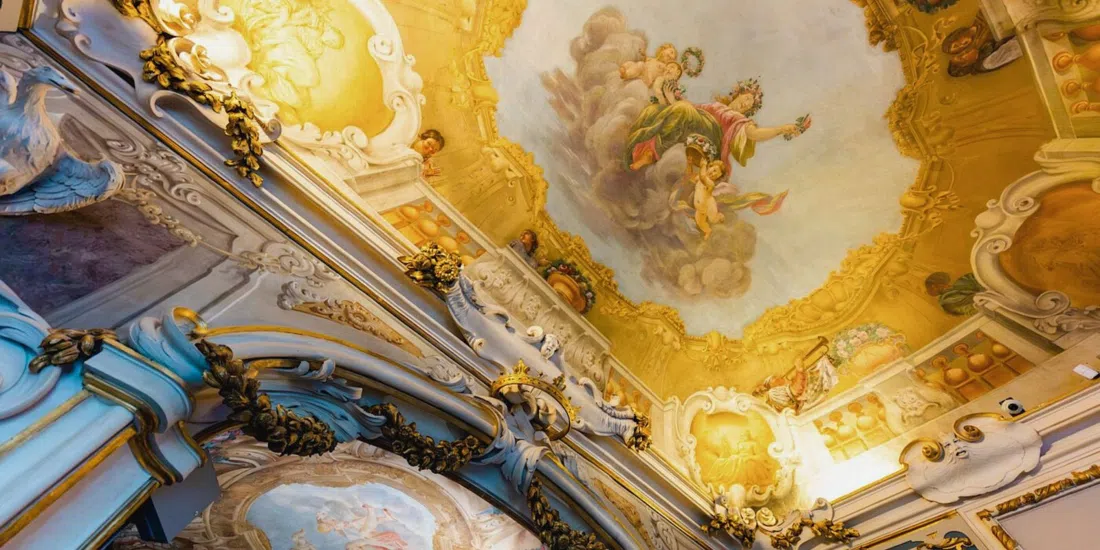
The Museo della Storia di Bologna — Palazzo Pepoli (Sala delle Acque, centro storico, a short walk from Piazza Maggiore) holds the Genus Bononiae museum's dedicated multimedia room on the canal network, and it's the cleanest single explanation in the city of how the above-and-below-ground system worked: the mills, the port, the gates, the slow twentieth-century burial of most of it. It's open Monday and Wednesday to Sunday, closed Tuesdays, with published hours; tickets run roughly €5 to €15, and groups can book through [email protected]. Twenty minutes here reorganises everything you'll see afterwards at Via Piella or Porta Lame, from a nice old window into a system you can actually follow.
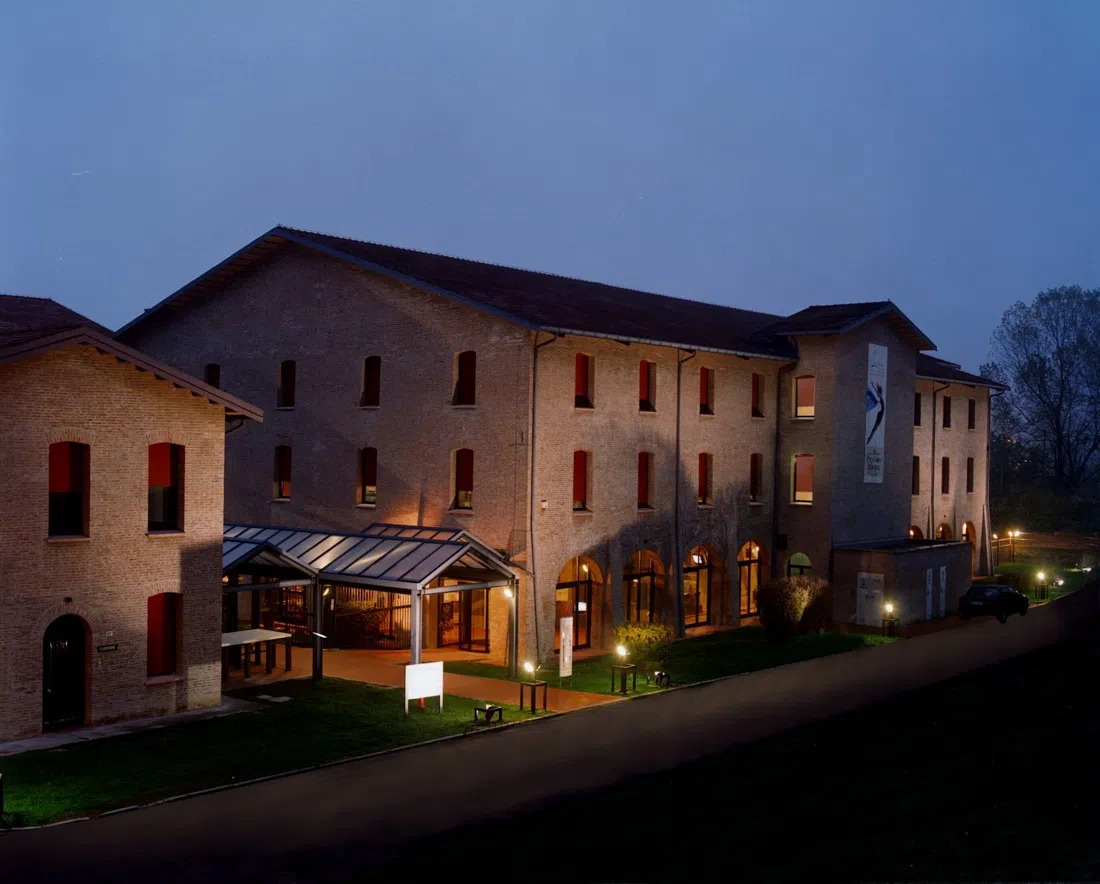
For the industrial half of the story, the Museo del Patrimonio Industriale (Bolognina, Via della Beverara, on the Navile) occupies a former brick and tile works on the bank of the Navile canal, a couple of kilometres north of the centre. Its reconstructed mill machinery is the payoff for everything the canals were built to move: this is what all that water was turning, before the network went underground and the silk trade that justified it faded. It keeps public hours Tuesday to Sunday, reduced in summer, and outside those hours switches to reservation-only for groups of five or more; call ahead either way. The ticket price is a token few euros. It's a proper trip out rather than a stop on a stroll, best paired with a walk or ride along the Navile itself, since the museum sits right on the towpath.
The source feeding every canal in the story
Everything traced so far (the window, the gate, the harbour park, the mill) drew its water from one place, and it's worth the half-day trip to see it: the Chiusa di Casalecchio di Reno (Casalecchio di Reno, a short train or bus ride southwest of the centre), a weir across the Reno river that has been diverting water into Bologna's canal system continuously since the twelfth century. UNESCO recognises it as the oldest hydraulic work in Europe still in operational use, which is not a small claim: most medieval infrastructure this old is a ruin you look at, not a working structure still doing its job eight centuries on.
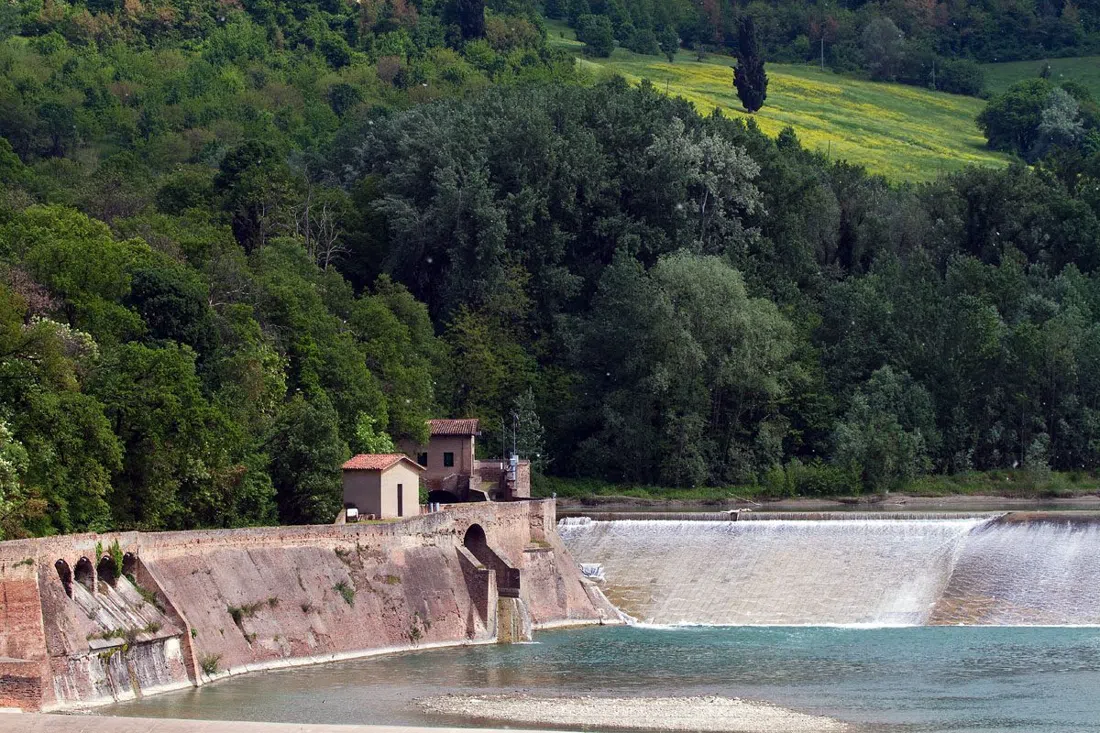
The site is open and viewable anytime from the surrounding park, no ticket, no booking, and the local canal consortium periodically runs guided group visits; arrange these ahead through the consortium rather than expecting one on the day. Even without a guide, standing at the weir and understanding that this is the literal source of the water you saw through the Finestrella di Via Piella closes the loop the rest of this piece has been tracing. It's the one stop here that isn't really optional if you want the whole shape of the story rather than a handful of disconnected pretty details.
Following the Navile out of the old walls
Every stop so far has been the canal system either buried or stopped: a window, a weir, a museum case. The Ciclovia del Navile (starts in the Bolognina, runs north out of the city) is the counterpoint: 35 kilometres of flat, largely traffic-free path following the Navile canal as it flows, north from the Bolognina through Corticella and out into the Emilian countryside. This is the canal alive and doing what canals do, rather than a fragment glimpsed through a wall.
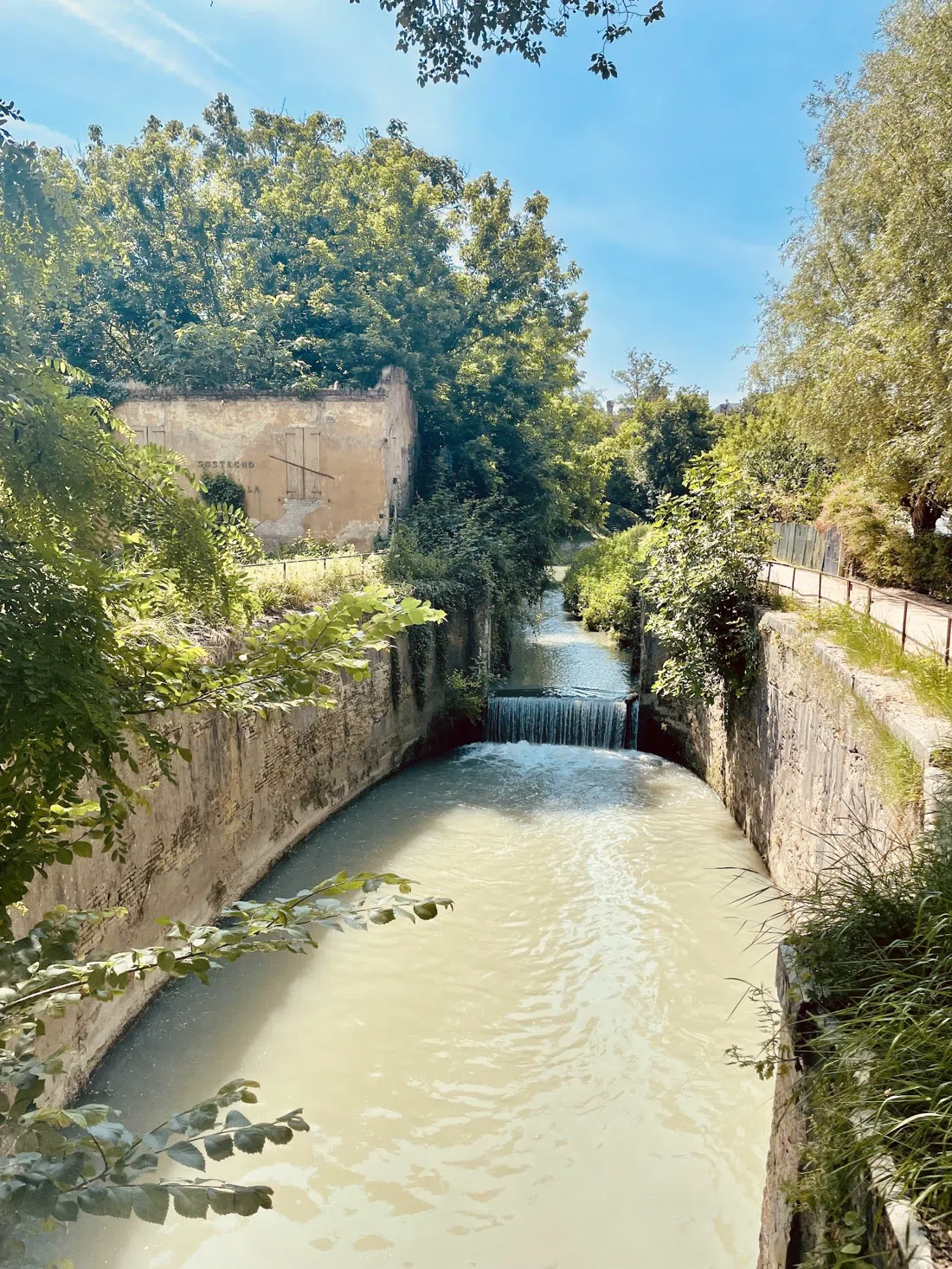
The path is free and self-guided: flat enough for families, well-signed, no fitness required. Bologna Welcome, along with local operators, run bookable guided rides for groups who'd rather have context along the way than piece the history together from a signboard. You don't need to ride the whole 35 kilometres to get the point; even an hour out from the Museo del Patrimonio Industriale, which sits directly on the route, gives enough open water and towpath quiet to understand what the buried city-centre stretches looked like before they went under.
Where to eat and drink along the water's old route
Two stops make the theme something you can taste rather than just look at.
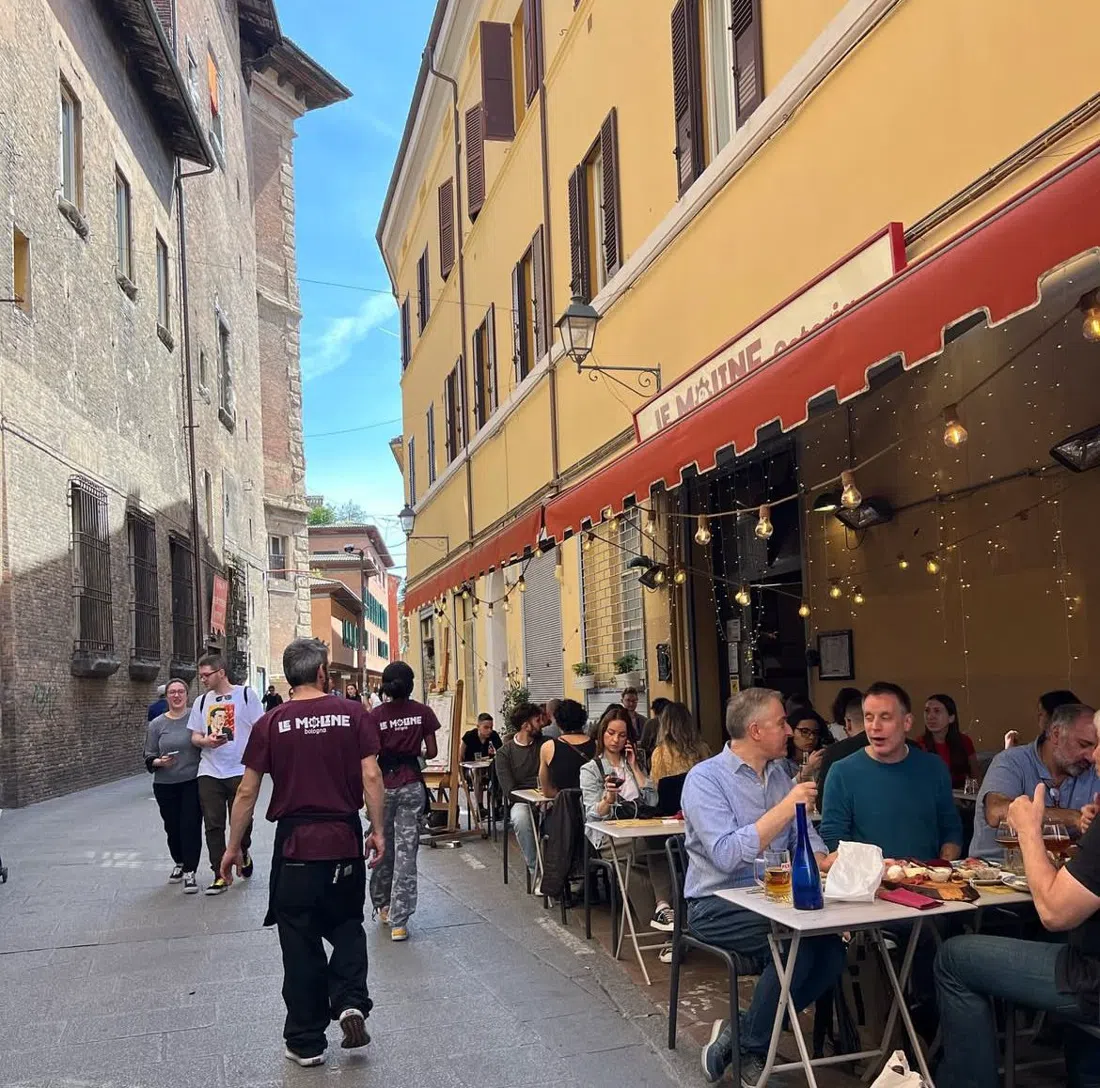
Le Moline (university quarter, on the old mill street near Via Piella) sits on the street that takes its name from the mills the canal once powered: the flour for the tortellini and tagliatelle on the menu was, in a literal sense, once ground by the water outside the door. It's a straightforward, no-gimmick Bolognese kitchen rather than a themed restaurant trading on the history, which is exactly the point: this is where locals actually eat, at €€ prices, with tasting menus available for anyone who wants the full spread. The kitchen runs all day with no afternoon closure, useful if an underground tour or museum visit runs long. Groups of fifteen or more should arrange a set menu in advance via WhatsApp rather than turning up and hoping.
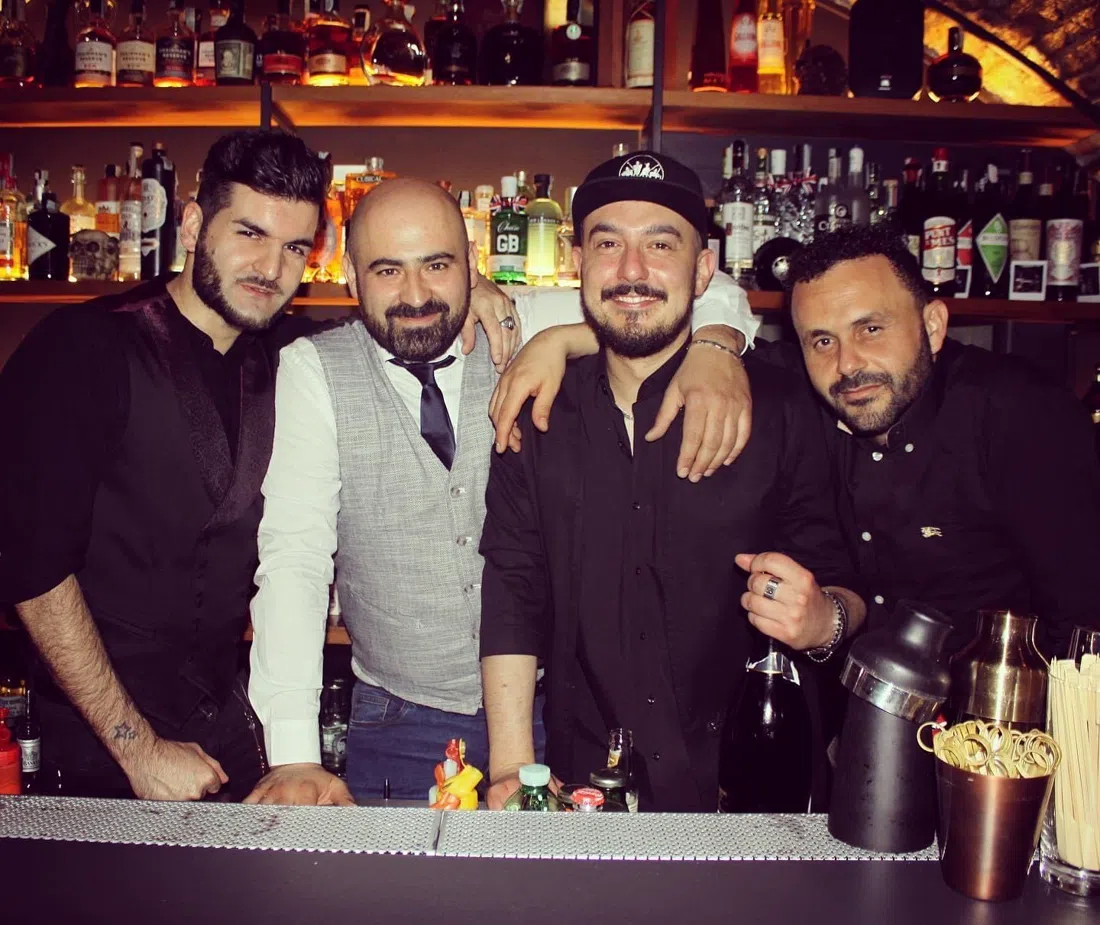
For the evening, Le Vie dei Briganti (San Vitale, near Via Zamboni) closes the piece with a drink rather than another fact. The ground-floor bistrot takes walk-ins and groups without fuss; downstairs, behind a door you have to know to look for, is one of the city's few genuine speakeasies: a small, low-lit room that suits pairs or a small group far better than a crowd. Cocktails run €€, and anything over six people should call ahead, since the speakeasy level is deliberately not built to scale. It isn't a canal site in the way the rest of this list is, but it's the right note to end on: the water is gone from view here too, buried under the street like everywhere else in the old centre, and a good bar is as honest a way as any to sit with that.
Practical notes for planning the trip
Bologna's centro storico is compact enough to cover the Finestrella, Porta Lame, Cavaticcio, Palazzo Pepoli and Le Moline on foot in a single day, with fifteen to twenty minutes between any two of them. The Museo del Patrimonio Industriale and the Ciclovia del Navile both sit further out in the Bolognina, a short bus ride or twenty-minute bike ride north; the Chiusa di Casalecchio di Reno is a separate half-day trip southwest, reachable by local train or bus in around fifteen minutes, best combined with nothing else on the list given the travel time on either side.
Carry some cash: the underground tours and several of the smaller sites deal in amounts (€5 to €10 a ticket) not always worth a card terminal for a volunteer-run association. Book the Associazione Amici delle Vie d'Acqua tour and any group table at Le Moline or Le Vie dei Briganti several days ahead in high season: these are the three stops here with real capacity limits, unlike the free, always-open street sites. Budget a full day for the centre-only version of this itinerary, two if adding Casalecchio and the Navile ride; either way this is a walking-and-looking theme rather than a heavy-spend one, with the underground tour the one line item worth planning around. For sleeping nearby, a Bologna hotel search turns up options within walking distance of Via Piella; for the rest of the city beyond this network, the Bologna guide covers the ground this piece doesn't.