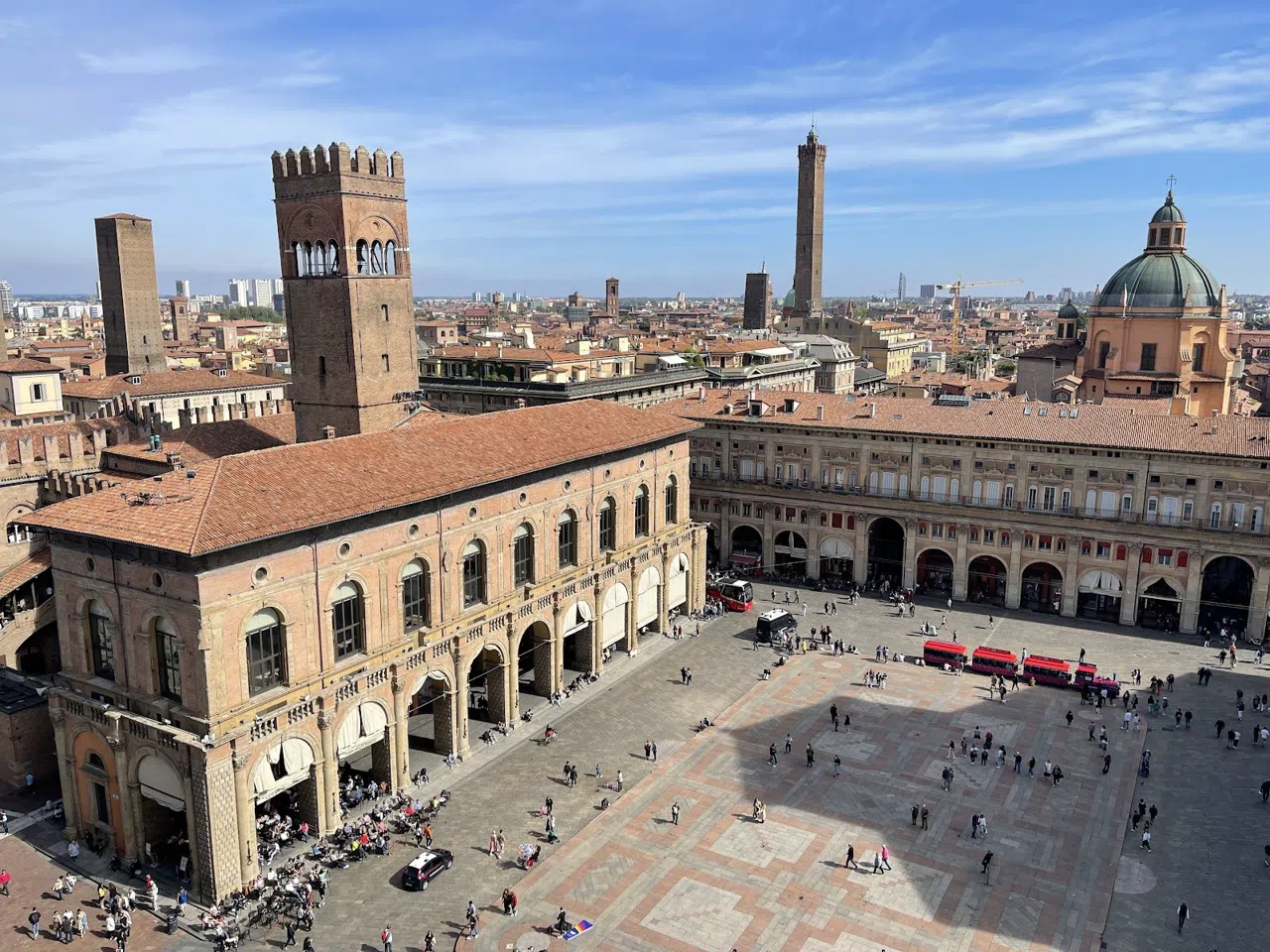

Piazza Maggiore was never tidied into a museum piece. Students cut across the raised stone of the Crescentone with bike wheels bumping, a council van unloads chairs for an event nobody has announced, and the half-finished brick-and-marble front of the basilica leans over all of it like a sentence stopped mid-word. October catches the square closest to the way the city actually uses it: warm enough at midday to sit on the steps, cool enough by seven that the crowd thins and the floodlights take over.
What you are actually standing on
Piazza Maggiore sits in the centro storico and is the geographic middle of it: a single open rectangle with a raised slab at the centre, the Crescentone, set a step above the rest of the paving. Nothing is ticketed, nothing is gated, and it never closes, which is the practical point of the place. Every monument named in this article sits within about two hundred metres of where you are standing, most of them free. Walking groups form here constantly. Guides brief their parties on the Crescentone steps or in the shade of the Podestà portico, and if you arrange to meet anyone in Bologna, this is where they will suggest.
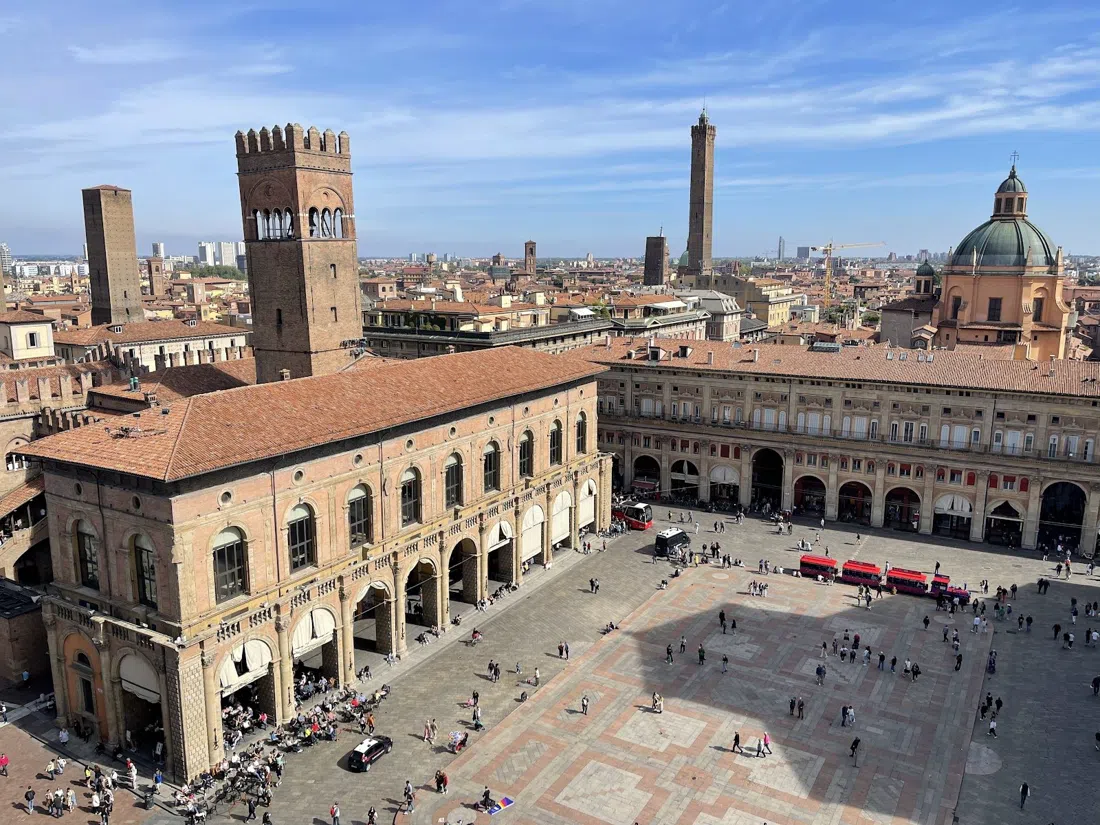
One caveat: the square is also the city's event platform. Council ordinances periodically fence off part or all of the Crescentone for concerts, screenings and civic occasions, so nobody can promise you an empty square on a given date. If a clean wide photograph matters to you, treat early morning as your reliable window and check locally once you arrive rather than planning around an image you have seen online. The information point at Piazza Maggiore 1/e is the quickest place to ask what is happening on the stone that week.
The basilica that was never finished
Basilica di San Petronio, on the square's south side, is the most important stop here and it is still free to enter, which is unusual for a church of this size in a city centre of this rank. The façade tells the story in one glance: marble cladding stops partway up and raw brick carries on. Inside, the scale is startling in the way only a building designed as a civic boast can be. Entry to the basilica and its museum costs nothing. A ticketed route through the chapels runs €5 full and €3 reduced, with the same €3 rate for groups accompanied by a guide and €2 for school parties.
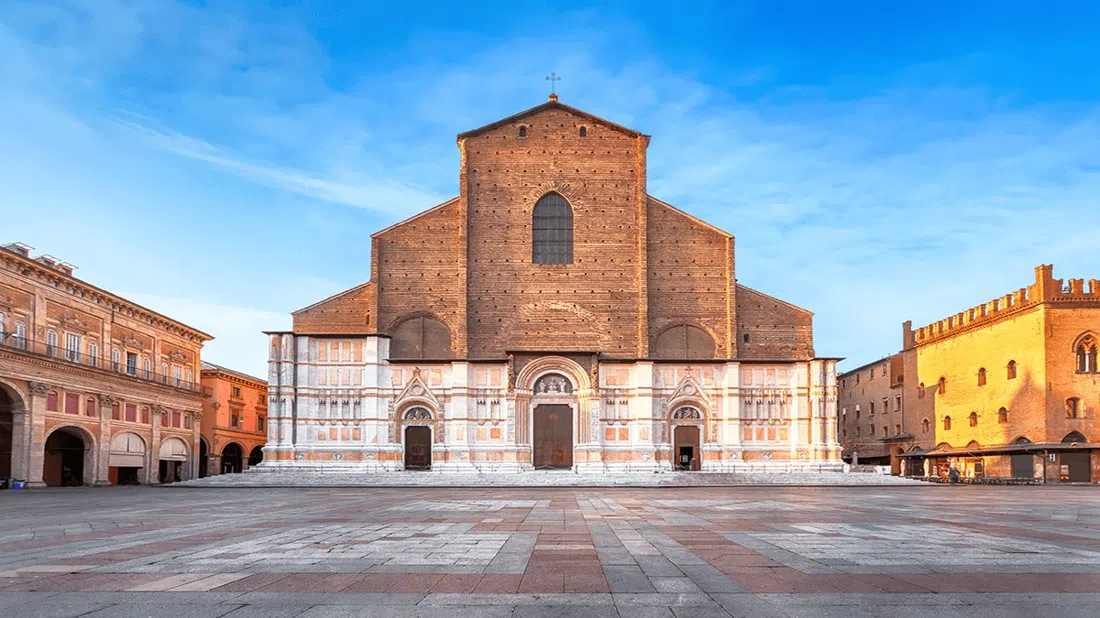
The panoramic terrace is now permanently closed following the restoration. A great many older guides and blog posts still send readers up it, and people arrive expecting a climb that no longer exists. The door rules are straightforward but enforced: shoulders and knees covered, hats off, no large luggage. If you are coming straight from the station with a suitcase, deal with the bag first.
Neptune and the whispering corner
Fontana del Nettuno, in the north-west corner of the square, reads sharply again since its restoration, and it photographs best from the angle that puts the clock tower behind the bronze. Locals will point you to a particular corner paving stone from which Neptune's trident appears to sprout from an unfortunate place on the figure itself. It is a two-minute piece of fun, free, and the step around the basin is the city's default rendezvous point, useful if your party is splitting up for an hour.

Straight behind it, Palazzo Re Enzo and the Voltone del Podestà (north side, under the arches) hide the best free trick in Bologna. The Voltone is a covered crossing passage, always open, and the four corners under its vault are acoustically linked: one person murmurs into the stone facing the corner, another hears it clearly from the diagonally opposite one, across the noise of people walking through. It works with a group of any size and children lose their minds over it. The palace itself is another matter. The state rooms upstairs open only for guided visits, exhibitions and events, roughly 150 days a year, so it is an events venue rather than a museum you can turn up and enter. Ask at the information point for current dates.
The best view over the square
With the famous leaning-tower climb shut, the definitive view over Piazza Maggiore is now from Palazzo d'Accursio's Torre dell'Orologio (west side of the square, with the Collezioni Comunali d'Arte in the same ticket). Entry is timed-only, three slots an hour at :00, :20 and :40, reservation compulsory, and the parties are small. That matters more than the price: per-slot capacity is tiny and latecomers are refused without a refund, so book before you travel and be at the door early. It is €10 full and €7 reduced for the tower and the civic art collections together, which is good value for an hour. The access rules are firm: no lift, closed-toe shoes required, no under-8s on the summit terrace, no animals.
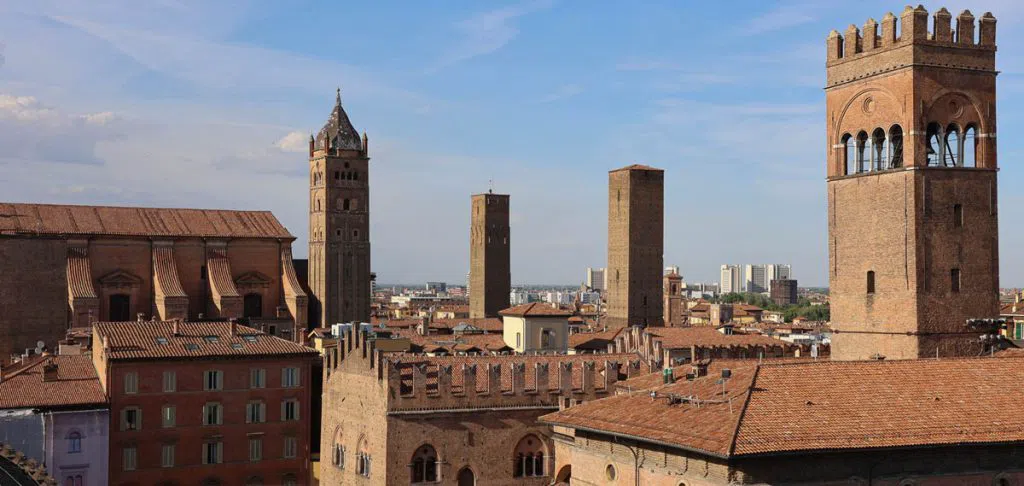
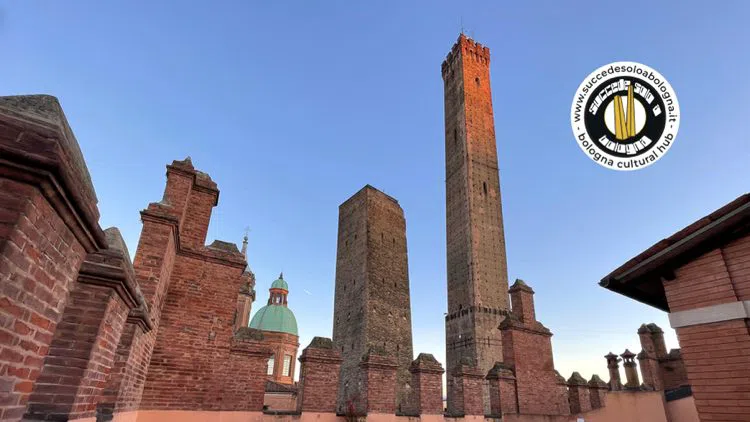
For height of a different kind, Strazzaroli Sky Experience (a few minutes east, by the Two Towers) is a reservation-only rooftop climb run by the Succede Solo a Bologna association, taken in small staff-accompanied groups. It replaced the association's now permanently closed Prendiparte climb and is currently the only way to get eye-level with the Two Towers while the Asinelli climb stays shut. Low double-digit euros per person. Check the booking portal, and book ahead, because the slots are small.
Two thousand years under a glass floor
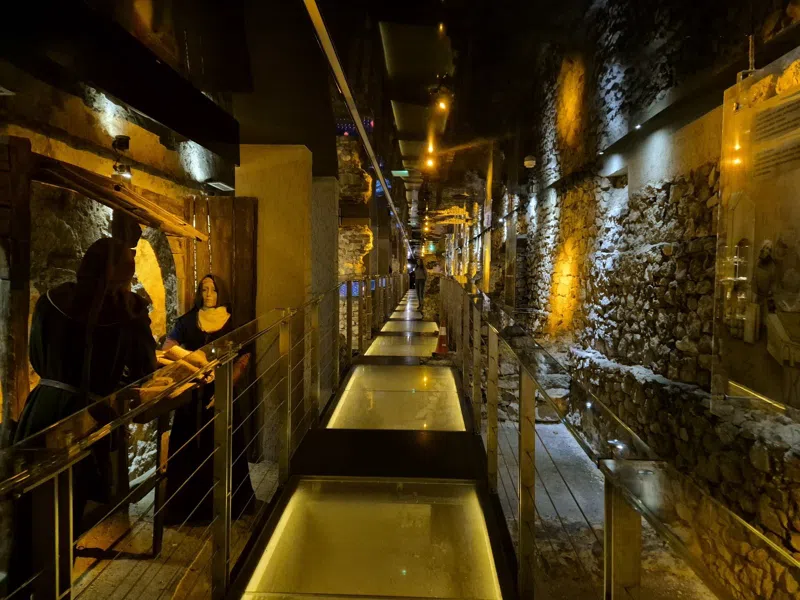
Biblioteca Salaborsa (the square's west flank, through Palazzo d'Accursio) is free to walk into and the best thing on the square when the weather turns. It is a working public library with a glazed central hall, and the floor is glass over excavated Roman and earlier remains, so you stand on the street grid of the city that existed here long before the towers. Wheelchair accessible, family facilities, and open until 20:00, which outlasts every ticketed site nearby. Informal groups are fine, but keep voices down on the glass floor; people are genuinely working.

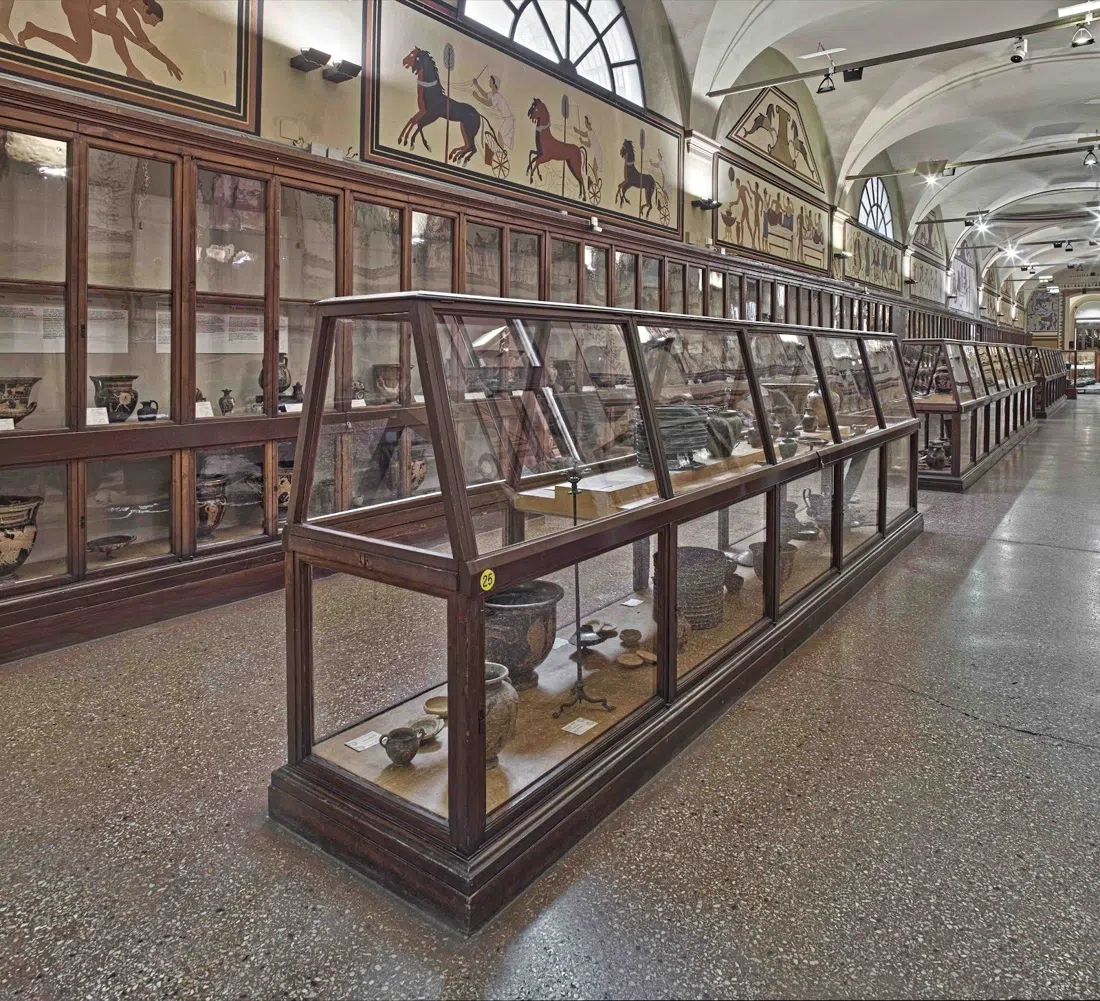
For the explanation behind what you have just stood on, the Museo Civico Archeologico (Via dell'Archiginnasio, on the square's own flank) is the cheapest serious indoor hour in the centre at €6. October visitors need to watch the calendar closely: summer hours run daily 10:00–19:00 until 31 October, after which it moves to 09:00–18:00 Monday to Friday and 10:00–19:00 at weekends. It closes on Tuesdays, which is the trap, and the ticket desk shuts an hour before the museum does.
Where October sends you when it rains
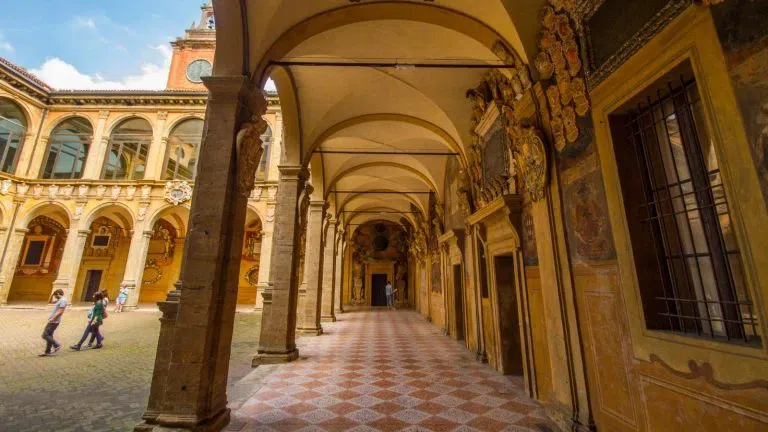
Palazzo dell'Archiginnasio and its Teatro Anatomico (Piazza Galvani, ninety seconds from San Petronio) is the best paid sight in the quarter: a carved spruce dissection theatre in the old university building, with skinned figures holding up the canopy. Timed slots, limited capacity, online booking required. It is €12 full, €10 reduced, €7 for residents and Cultura Card holders, under-12s free. Hours are 10:00–18:00 Monday to Friday and 10:00–19:00 Saturday, but only 10:00–14:00 on Sundays and holidays, which catches people out constantly. Pair it with the square on a weekday.
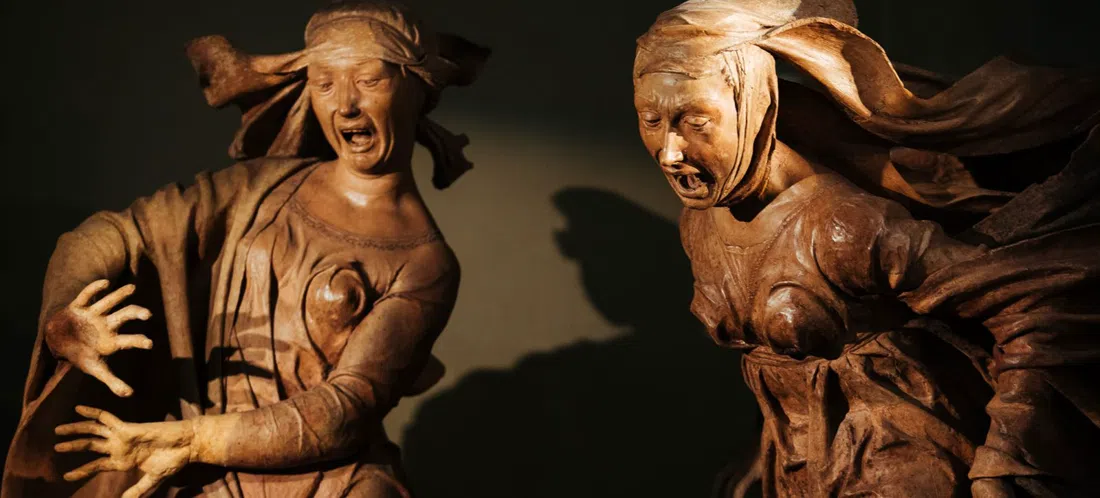
Santuario di Santa Maria della Vita (Via Clavature, in the market lanes) holds Niccolò dell'Arca's Lamentation, the most emotionally violent sculpture in the city: six terracotta mourners mid-scream, ninety seconds off the square and tucked inside the food quarter. It opens daily 10:00–18:30 with last entry at 18:00, and crucially it does not close on Monday, which makes it the day-one fallback when the civic museums are shut. It costs €8 full and €5 reduced, with the €5 rate for groups of ten or more and €4 for school groups, covering the church, the oratory and the small health museum.
For the evening, Cinema Modernissimo (under the Voltone del Podestà) is the most atmospheric indoor thing within fifty metres of the square, a restored subterranean cinema showing archive prints. There is no box office on site: buy online, at the Cineteca bookshop under the Voltone (daily 09:30–22:30), or at the Bologna Welcome desk at Piazza Maggiore 1/e. Roughly €7–10 a ticket, group bookings through the Cineteca. Restored prints usually screen in the original language with Italian subtitles, so check the listing before sending non-Italian speakers.

Eating within two hundred metres
Mercato di Mezzo (Quadrilatero, 100m east) is the honest answer for a mixed group with different appetites: a covered food hall open daily from roughly 09:00 to midnight, no bookings, communal tables, and counters you simply split across. Expect to stand at peak, since it is busiest 13:00–14:30, so go early or late. Reckon €5–20 a head.
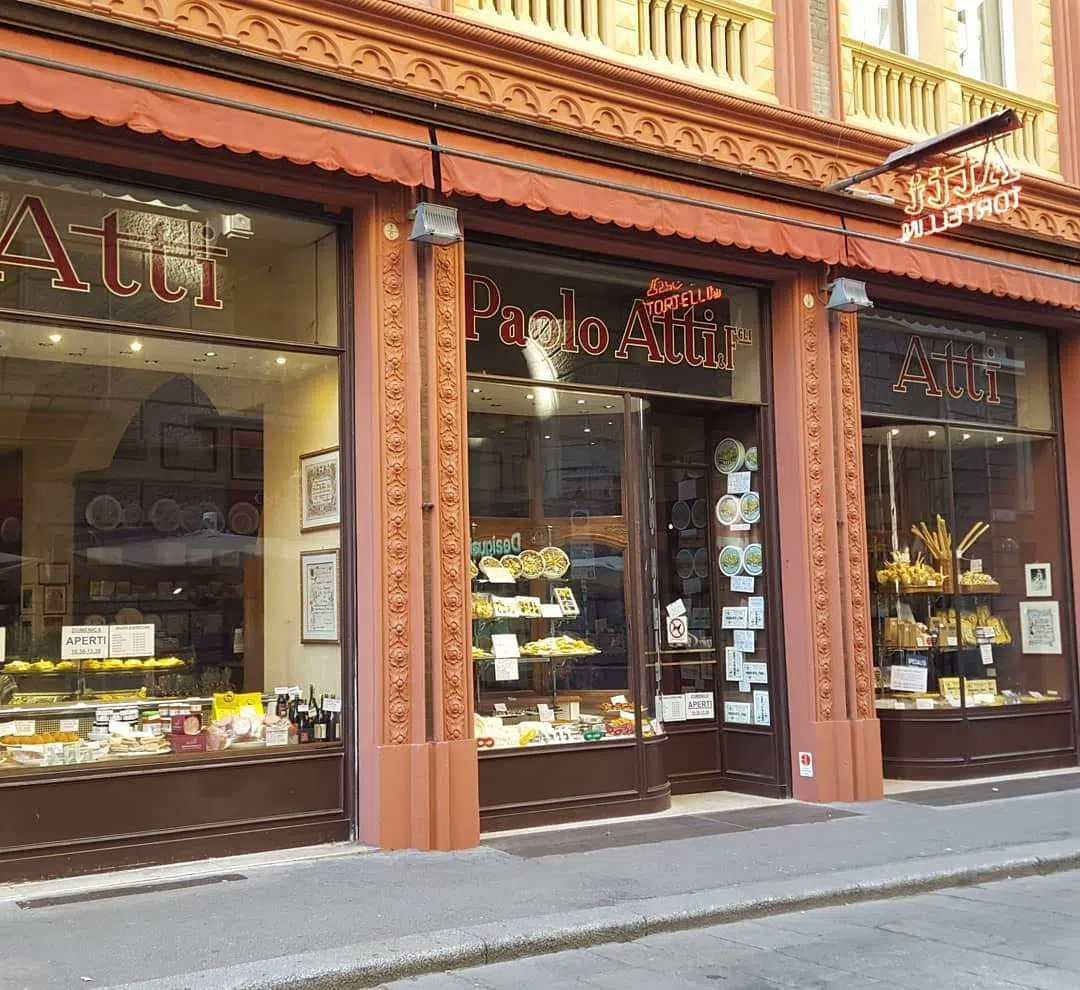
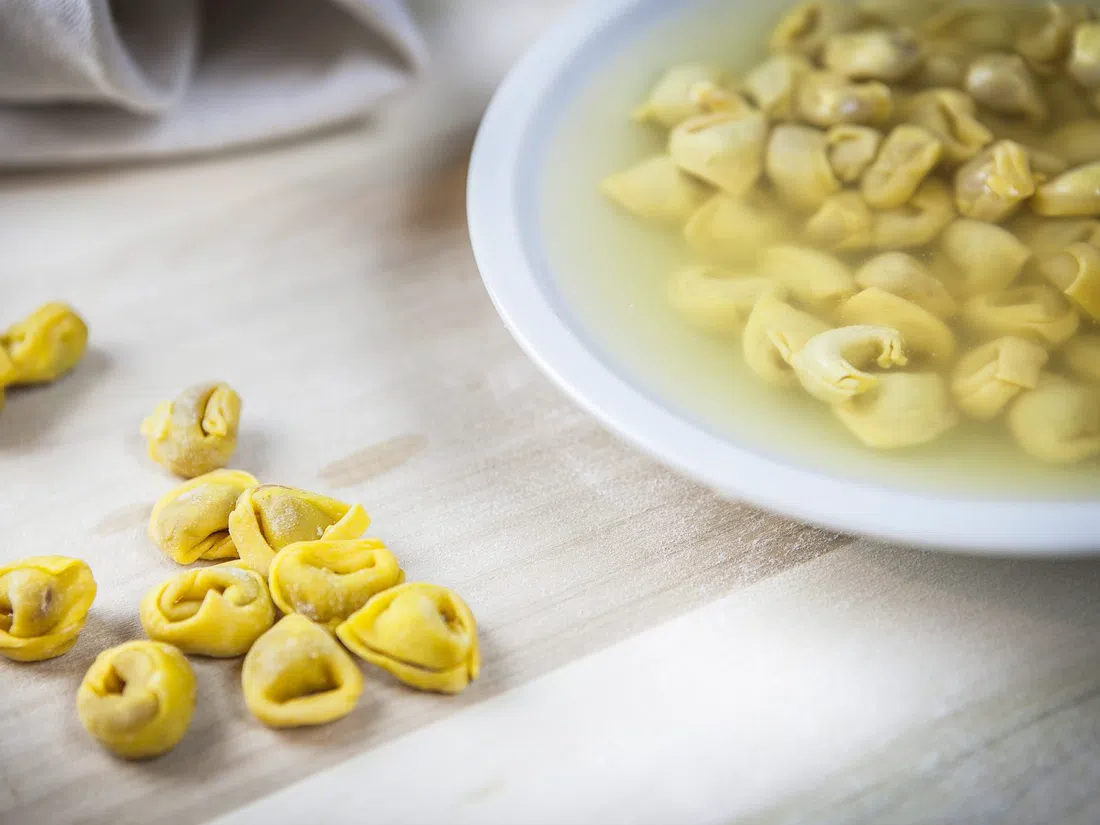
Tamburini (Quadrilatero, on the corner of Via Caprarie) has traded here since 1932 and is the most reliable place to taste the local cold cuts without committing to a sit-down restaurant. Order at the counter in the self-service, keep large groups away from the 13:00 rush, and use the attached wine bar if you want to linger. It runs €10–25 a head. It is touristed and it knows it, so arrive with that expectation rather than a grievance. Paolo Atti & Figli (Via Caprarie, with a second historic branch on Via Drapperie) has been baking since 1868 and is the credible take-something-home stop, with pastries, bread and fresh pasta at €5–15. It is a small shop, so send groups in a few at a time, and note the Sunday closure if you are here for a weekend.
Caffè Zanarini (Piazza Galvani, between the square and the Anatomical Theatre) is the smartest place to park for twenty minutes, open 07:00–21:00 on weekdays and from 08:00 at weekends. A coffee taken standing at the bar costs €2–4, while sitting at a terrace table costs considerably more for the same cup. That is normal Italian pricing rather than a scam, and international readers are often caught by it. Aperitivo runs €10–15. No bookings, fine for two, tight for a large group at drinks hour.
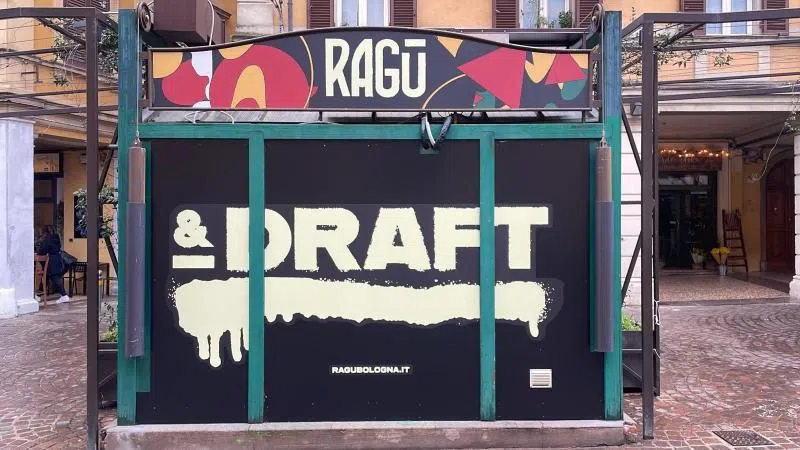
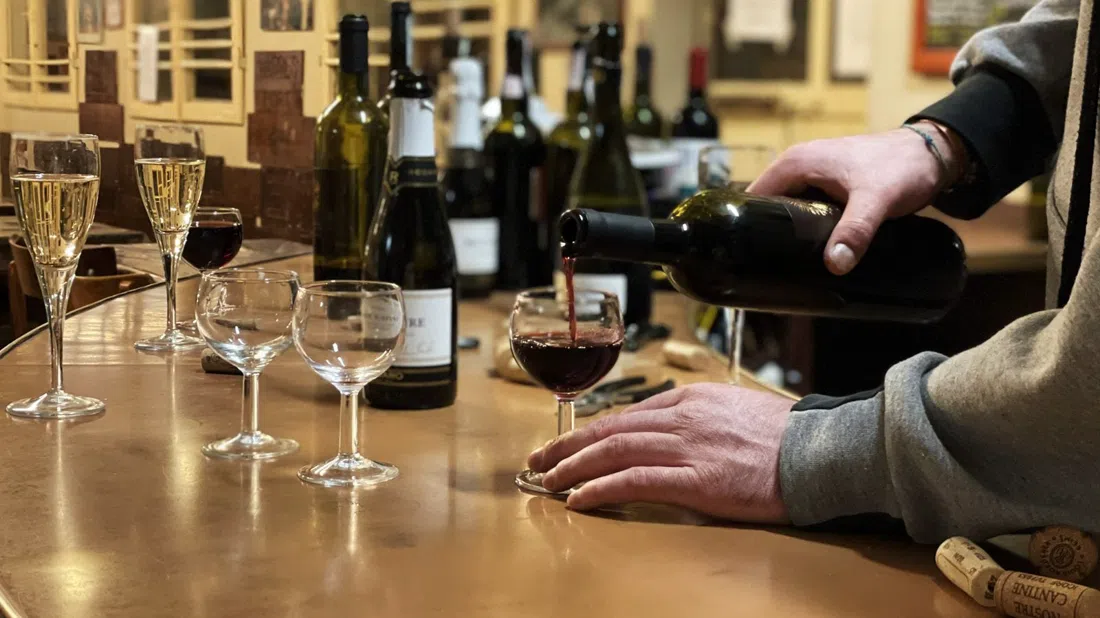
Osteria del Sole (Vicolo Ranocchi, three minutes from the square) has been open in some form since 1465 and serves drinks only, €3–6 a glass, cash-friendly, no reservations. There is no kitchen and the bar will genuinely not feed you, so buy mortadella, cheese and bread in the market lanes first and carry it in. Groups are welcome to pile in and share a table. Closed Sunday, open roughly 11:00–21:30 the rest of the week. It is the most Bolognese hour available this close to the square.
Doors, tickets and what a guide adds
For the square itself, the fountain, the Voltone, San Petronio and the library, you need nothing and you can turn up at any hour. The paid sites split into two kinds. The timed-slot ones (the clock tower, the Anatomical Theatre, the rooftop climb) must be booked before you travel, because capacity per slot is small and walking up on the day in October is a coin toss. The simple-ticket ones (the archaeological museum, Santa Maria della Vita, the chapel route in the basilica) you can buy at the door without drama.
A guided walk is the other way to do the square, and it earns its keep mainly by bundling the food quarter with the monuments and handling the market counters for you. The best-reviewed small-group option here starts from around 128 USD per person and runs six days a week, Monday to Saturday. Some of its departures are already fully sold out on specific dates, 2, 3, 5, 7, 8 and 10 October 2026 among them, with fourteen further dates gone; other dates are still bookable. If a guided morning is central to your plan, fix it before you fix anything else.
Best time to go in October
Mornings before 10:00 give you the square at its emptiest and the cleanest light on the basilica front, with the market lanes just setting up. The hour before sunset is the other good one, when the brick goes properly orange and the Crescentone fills with people doing nothing in particular. Note that the clocks go back on 25 October 2026, so a late-month visit loses its light abruptly around 17:00 and the floodlit square arrives much earlier in the evening.
By day of week, October rewards a weekday. Sunday truncates the Anatomical Theatre to 10:00–14:00 and closes both the 1868 bakery and the 1465 wine tavern. Monday closes most civic museums, which is exactly when Santa Maria della Vita and the library carry the day. Tuesday closes the archaeological museum. Expect mild afternoons and genuinely cool evenings, with rain arriving in bands rather than all day. The porticoes mean you can cross most of the centre without getting wet, so a wet forecast is not a lost day here.
Is it worth it
Yes, and more honestly than most famous squares, because the free half is the good half. You can spend a full, satisfying day inside a 200-metre circle for the price of lunch: the square, the basilica, the fountain, the whispering vault, the Roman city under the glass floor. Add the clock tower and you have the view; add the Anatomical Theatre and you have the one thing visitors talk about on the train home.
It suits almost everyone, with caveats. Couples do well here on an unplanned evening, with cinema, wine and aperitivo needing no booking beyond the film. Families should know about the no-under-8s rule on the tower terrace and should lead with the whispering corner. Large groups work best split across the market counters and briefed somewhere other than the middle of the Crescentone. Anyone travelling for the old tower climbs should rebook their expectations entirely: the basilica terrace is permanently closed and the Asinelli climb is shut, so the clock tower plus the rooftop climb are now the whole answer.
Staying on or beside the square
Searches for an apartment on Piazza Maggiore in Bologna are among the most common things people type before this trip, and the honest picture is that the buildings directly on the square are civic, ecclesiastical or commercial. The genuine holiday apartments and small hotels sit on the lanes immediately behind, within one to three minutes' walk, which is functionally the same thing and quieter. Anything on the square's own perimeter will hear the event stage when there is one. Compare what is actually available on the surrounding streets with a Bologna hotel search, and if you are still shaping the wider trip, the Bologna guide covers the quarters beyond this one.
Practical notes
The airport connects to the central station by a short automated shuttle train in under ten minutes. From the station it is a walk of roughly twenty to twenty-five minutes to the square, almost all of it under porticoes, or a few stops on a city bus. The historic centre is heavily restricted to traffic, so do not plan on driving to the square. Park outside the ring and walk in.
Cards work nearly everywhere, but keep €20–30 in cash for the wine tavern, market counters and small bakeries. For timing, two half-days beat one long one: monuments and the tower slot in the morning, market and cinema in the evening. On budget, a free day costs nothing at all beyond food; adding the archaeological museum makes it €6. A full paid day (clock tower €10, Anatomical Theatre €12, Santa Maria della Vita €8) comes to €30 per person, plus €5–20 for lunch and €7–10 if you end underground at the cinema. Book the timed slots first, and leave the square itself unplanned.