
Bologna's porticoes run for the better part of sixty kilometres, sheltering pedestrians from sun and rain in equal measure, and somewhere beneath that terracotta canopy the city decided, in the ruins of 1945, to stay red. Not communist in the museum-piece sense — the party that built the reputation dissolved in 1991 — but red in instinct: co-operative, secular, municipally generous, and stubbornly proud of a Resistance that cost it dearly. Visitors chasing the postcard version of Italy will find something else here: a working city that still argues about politics over lunch, and a street culture that never fully separated art from protest.
The nickname "La Rossa" — the red one — is usually explained by the terracotta rooftops that colour the historic centre from above, but locals will tell you it was earned twice over: once by the Communist Party's four-decade grip on the city council after 1945, and once by a Resistance that saw entire families run messages, hide weapons and shelter partisans through the winter of 1944–45. What follows is not a checklist of monuments but a walk through the places where that history is still legible — some of them solemn, several of them a genuinely good night out, and none of them requiring you to already know who Gramsci was before you arrive.
The memory: partisan history made visible
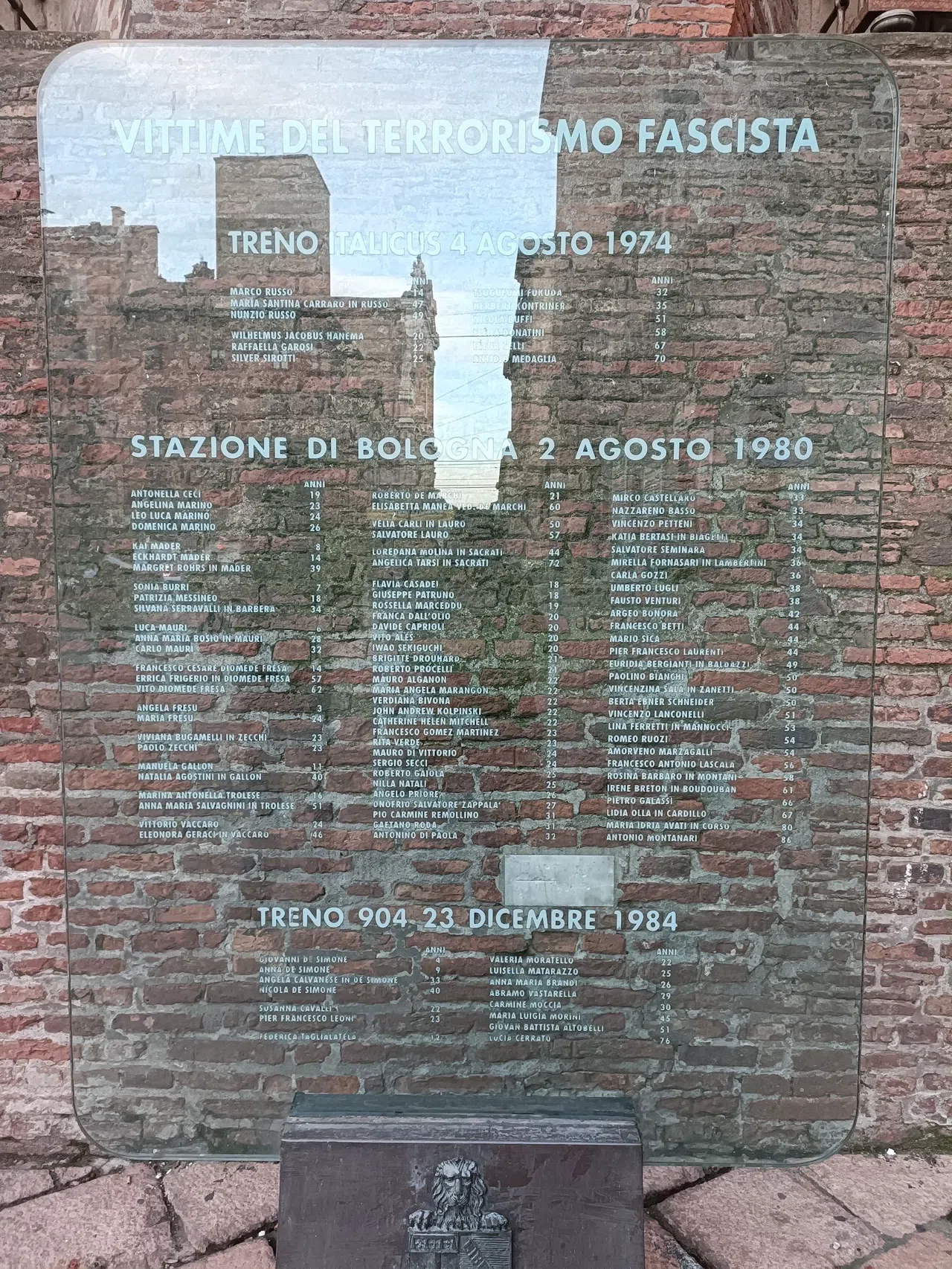
Start at the Sacrario dei Caduti Partigiani (Piazza Nettuno), a wall of black-and-white photographs fixed to the flank of the Palazzo del Podestà, thirty seconds from the fountain crowds in Piazza Maggiore. Women began pinning photographs of the partisans killed in the 1943–45 Resistance to this wall on the morning after Liberation in April 1945, and the city never took them down. Eight decades on it is still the rawest single image in Bologna: hundreds of young faces, mostly in their twenties, under the arcade where office workers now eat their lunch. It costs nothing, needs no booking, and is easy to fold into a group itinerary — people tend to go quiet here, which is the point.
For the paper trail behind the wall, walk or take a short bus north-east to the Fondazione Gramsci Emilia-Romagna, the regional archive built around the writings of Antonio Gramsci, the Sardinian-born PCI theorist Mussolini's regime kept in prison until close to his death in 1937. It was in prison, denied paper for years and then rationed a few notebooks at a time, that Gramsci wrote the fragments — on hegemony, on civil society, on why culture matters as much as economics to a political movement — that Italy's post-war left would spend decades unpacking. This is not a museum you wander into on a whim — it is a working study room, open Monday to Friday, 09:30–18:30, and research visits need to be arranged in advance — but for anyone who wants to understand why Bologna's left was built on ideas rather than slogans, this is the source material, and entry is free.
The streets: murals and the anti-establishment quarter
Via del Pratello, running west from Piazza Malpighi towards the old city walls, is where Bologna's mural culture actually lives, rather than where a tour bus stops for a photo of it. By day it is a scruffy, likeable street of junk shops and osterie; by night, particularly Thursday to Saturday, it fills with students and locals drinking on the pavement outside a run of small, informal bars that don't take reservations and don't need to — a group of six can simply walk the street and see what has room. Expect to spend €€ on drinks and street food, and don't expect much English on the chalkboards.
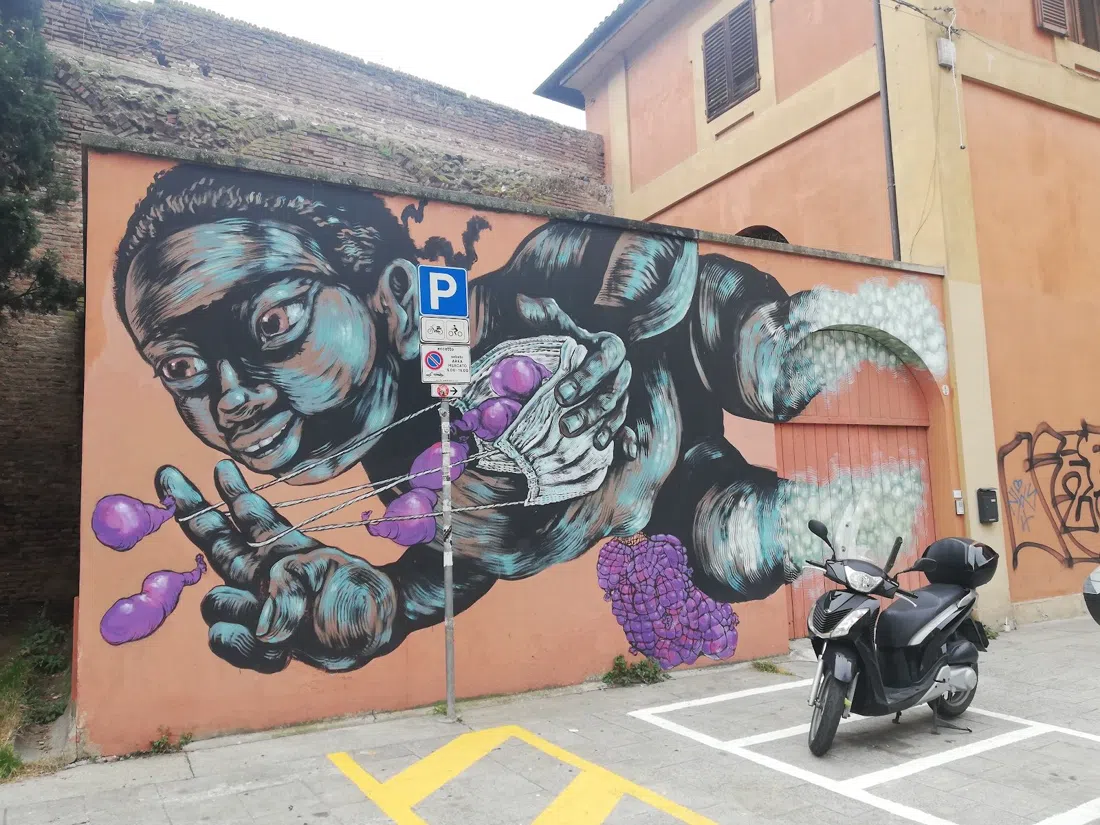
A fifteen-to-twenty-minute walk east, on the far side of Via Zamboni, the Rione Cirenaica murals cover an entire residential quarter — a self-guided walk through streets where painted resistance fighters, slogans, and local political history run across garage doors and apartment blocks with none of the curation of a gallery. It sees a fraction of Pratello's foot traffic, which is exactly why it feels more honest: this is a neighbourhood that decorates itself for its own residents, not for visitors. There is nothing to book and nothing to pay — bring a map or a phone, since the murals are spread across several streets rather than concentrated on one.
The university quarter: radical since the twelfth century
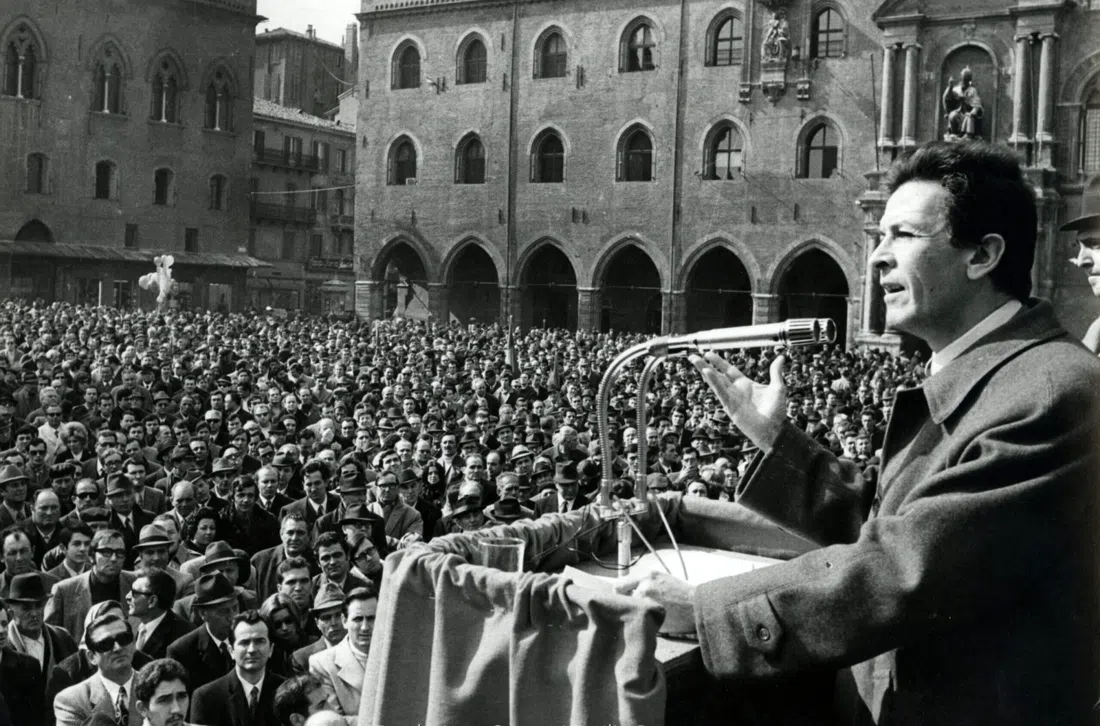
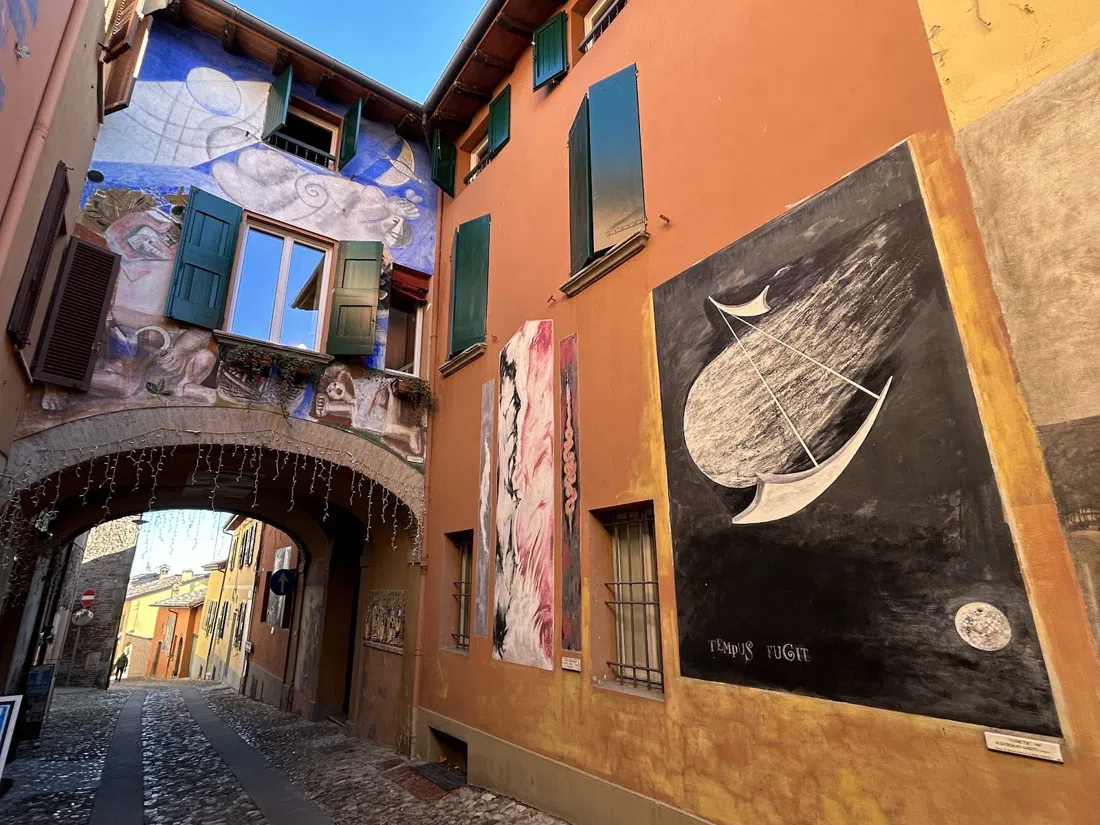
Piazza Verdi and Via Zamboni sit at the heart of the world's oldest continuously operating university, founded in 1088, and the square has functioned as a pressure valve for student politics for more than half a century — the 1968 and 1977 movements both had their flashpoints here, and student occupations still surface periodically today. The Movement of 1977 in particular started here and turned violent a few streets away, feeding an underground student radio station, Radio Alice, whose broadcasts and eventual shutdown became a national symbol of the clash between the establishment left running the city council and the harder, less patient left filling its university. Piazza Verdi is loud, crowded most evenings, entirely public, and free — fine for a group, though not the place for a quiet conversation.
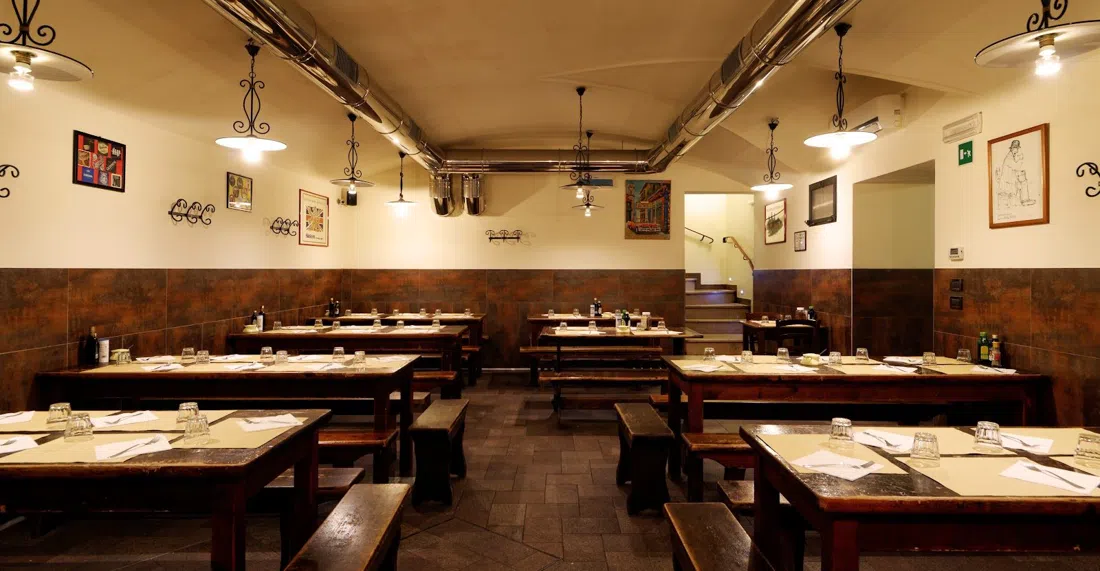
For the canteen version of that same politics, eat at Osteria dell'Orsa, tucked into the university district, which opened in 1977 — the same year riot police occupied the university during the student uprisings that briefly made international news. Shared seating means small parties mix with strangers as a matter of course, there is no booking for a table of two or three, and prices stay resolutely student-friendly (€). It is not a place for privacy, but it is the closest thing Bologna's student left has to a common room.
Drinking like a comrade
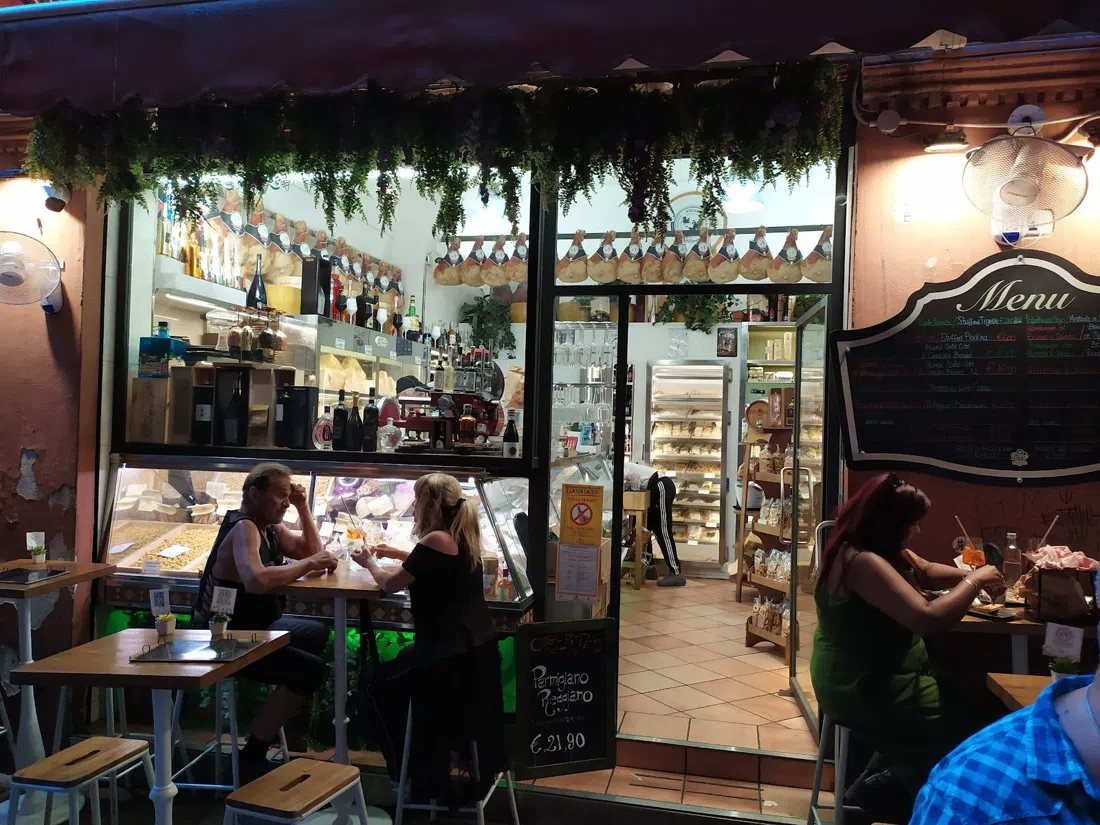
A ten-minute walk south of the university, in the shadow of the basilica of San Domenico, Osteria del Sole predates almost everything else on this list. It serves wine only — no food, ever — on the understanding that you bring your own from the market stalls or delis nearby, and drink it at long communal tables alongside whoever else is sitting there. It is cash only, gets full fast on weekends (arrive before 7pm if you want a seat), and suits a loose, sociable group far better than a couple looking for intimacy. The prices are almost absurdly low (€) for what is, in effect, the informal ancestor of the co-operative drinking culture the rest of this itinerary makes explicit.
The co-operative economy, still running
It is easy to read "Red Bologna" as something that only exists in murals and archives, so it is worth making a five-minute, unglamorous detour into a Coop Alleanza 3.0 city-centre branch — a supermarket, nothing more, and precisely the point. Europe's largest consumer co-operative traces its roots to a single shop opened in Bologna in 1911, and the model — member-owned, profits returned rather than extracted — still shapes how much of the city buys its groceries. This is the least photogenic entry on this list and arguably the most important: the co-operative economy was never a side project of Bologna's political left, it was the left's actual welfare state, built alongside housing co-operatives and mutual-aid societies long before the post-war council took shape. There is nothing to book, prices are normal supermarket prices with member discounts for those enrolled, and it works best as a two-minute pause on a longer walk rather than a destination in itself. Bring a group in and they will, at minimum, understand that the co-operative habit here isn't nostalgia; it's Tuesday.
Coalition politics in brick and mortar
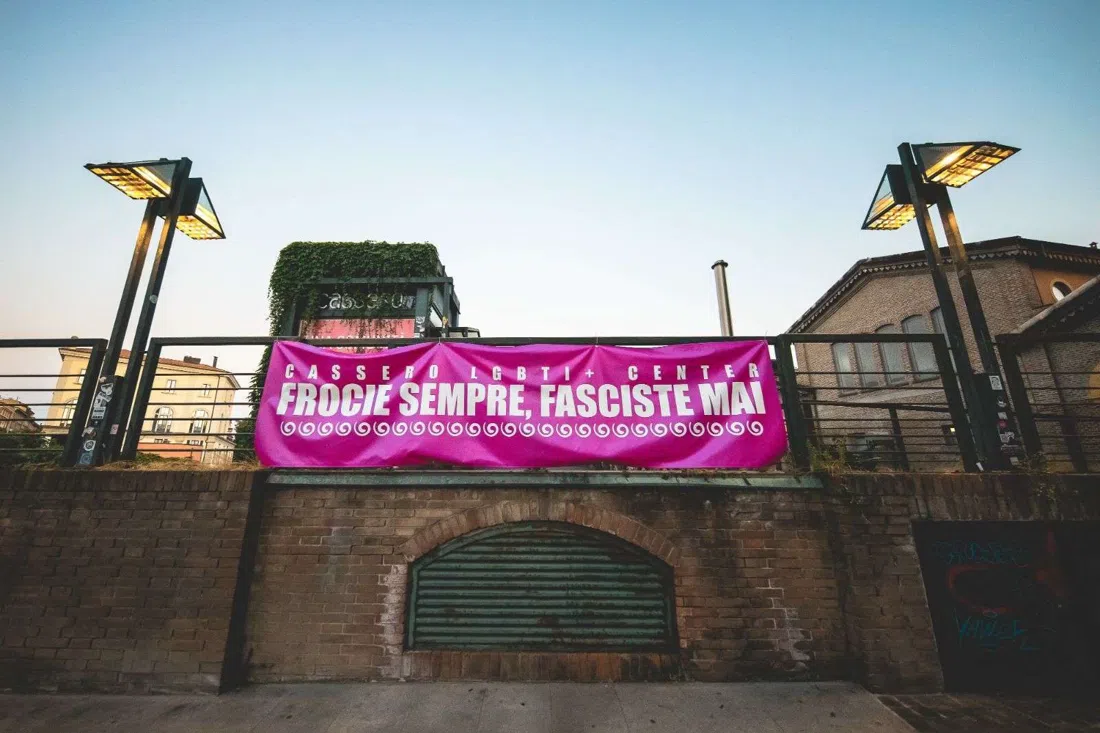
The Bolognese left has always been a coalition, and nowhere is that clearer than at the Cassero LGBTQIA+ Center, Italy's first council-recognised gay centre, established in 1982. That recognition didn't happen by accident: it took a left-run council willing to hand over municipal space to a movement most of Italy still treated as fringe, at a point when few other Italian cities would have done the same. It is open 365 days a year and genuinely welcomes visitors and groups off the street, though some evening events are members-only, so it's worth checking the calendar before turning up expecting a specific night. Entry to the building is free; event prices vary. It is as much a piece of the city's political history as any of the murals — proof that Bologna's municipal left built coalitions rather than a single ideological line.
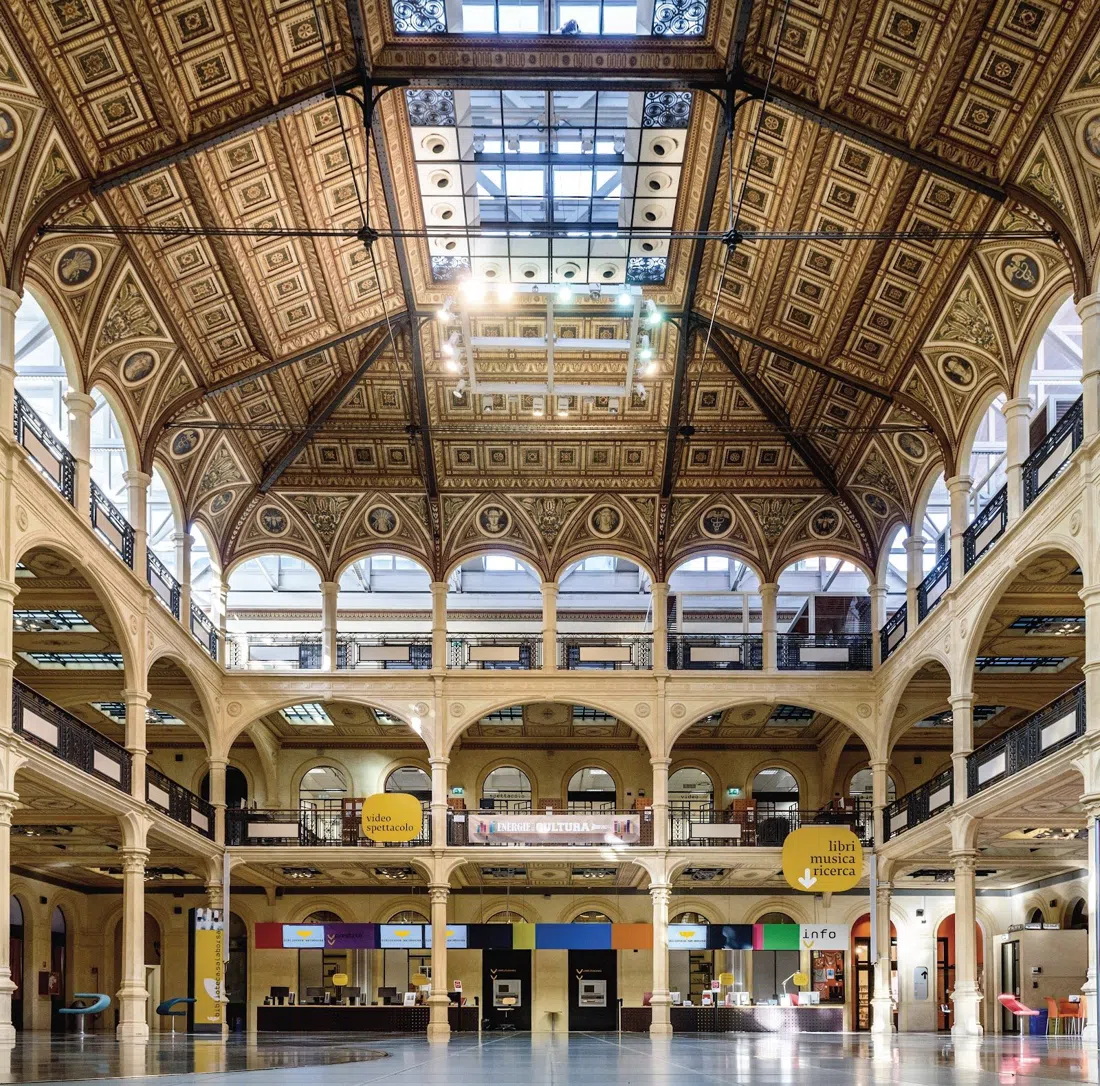
A twelve-minute walk away, beside the Sacrario itself, Biblioteca Salaborsa makes the same point in architectural form: a grand former stock exchange, its Roman-era floor visible through glass beneath your feet, thrown open as a free public library with no membership barrier to browsing. It isn't leftist by label — it's simply the clearest physical expression of the municipal-socialist instinct that runs under everything else here: civic space, generously built, given away.
Print and autonomy: where the movement still meets
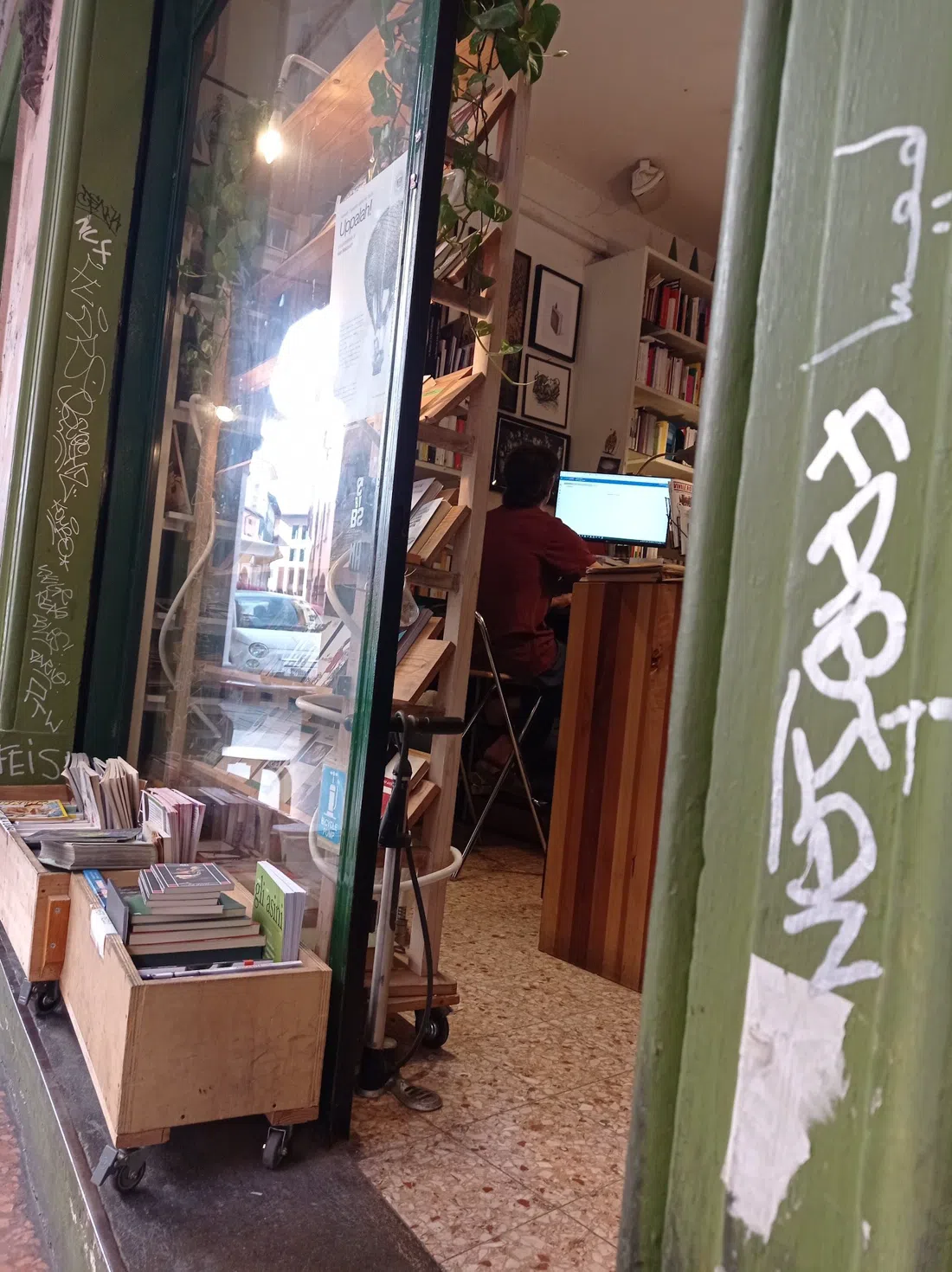
Two smaller stops round out the picture, both worth doing in the same afternoon since they sit within walking distance of the university quarter. Modo Infoshop, running since 2003, is a small independent bookshop — comfortable for two to four people browsing rather than a bookable activity — stocking self-published pamphlets on local political history next to underground comics and small-press fiction. Everything is free to browse; books are, obviously, for sale.
Vag61 – Spazio Libero Autogestito, at the same address for more than fifteen years, is a self-managed social centre rather than a sight to be viewed — it runs on an events calendar of gigs, talks, and meetings that should be checked online before you bring a group, since turning up on a dead night means an empty room. When something is on, entry is free or donation-based and bar prices are low. It is, in 2026, still a working example of the autonomous social-centre tradition Bologna's movements of the 1970s produced and never entirely let go of — a lineage of squatted and later legalised spaces, self-run without council funding, that treats politics as something you organise rather than something you visit.
Getting around, cash, and budget
Bologna's centro storico is compact enough to cover most of this list on foot — the Sacrario, Piazza Verdi, and Biblioteca Salaborsa are all within ten minutes of each other, with Pratello, Cirenaica, and the Osteria del Sole each a further ten-to-twenty-minute walk beyond that. A day pass on the local bus network (TPER) is worth buying if the heat or the schedule makes walking unappealing, but nothing here requires a taxi.
Carry cash. Osteria del Sole takes nothing else, and several of the smaller bars on Pratello and around Cirenaica prefer it even where cards are technically accepted. A realistic daily budget for this itinerary — a bottle of wine and bring-your-own food at Osteria del Sole, a meal at Osteria dell'Orsa, a couple of rounds on Pratello — comes in comfortably under €50 a person, excluding accommodation.
Timing matters more here than at most sights: the Fondazione Gramsci and Vag61 both require checking hours or a calendar before you go, and Pratello only really comes alive after dark. Aim for a weekday afternoon for the archive and the murals, and save the bars and osterie for a Thursday-to-Saturday evening, when the university quarter is at its loudest and most representative of itself. Term time — broadly October to May, with a dip around the Christmas and Easter breaks — is when Piazza Verdi and Via Zamboni feel genuinely alive rather than merely picturesque; come in August, when much of the city empties out for the summer break, and the political energy this itinerary is built around will be thin on the ground.
None of this requires more than two days done properly, and it pairs easily with the food-focused version of Bologna most visitors come for — nobody is asking you to choose between a partisan memorial and a plate of tortellini in brodo. For where to sleep while you do it, a Bologna hotel search covers the centro storico options within walking distance of everything above; for the rest of the city beyond its political history, the full Bologna guide has the wider picture.