Bologna-nummeret
Standing Under Bologna's Medieval Merchant Court
The loggia at Palazzo della Mercanzia is free, open to the street, and worth about ten minutes on its own; a short walk nearby is what makes it legible.

Av Beatrice HartleyBologna one neighbourhood at a time

Two pointed arches wide enough to span the pavement open off the corner of Piazza Mercanzia, and above them sits a pierced-marble balcony flanked by empty circular oculi. The 14th-century statues that filled those oculi were taken off the front and now sit indoors elsewhere in the city. Behind the arches are the offices of the Bologna Chamber of Commerce, which you reach by appointment rather than by ticket.
What you see at Palazzo della Mercanzia
Palazzo della Mercanzia (Piazza Mercanzia 4), the Loggia dei Mercanti, is a late-Gothic front of brick and pink-white marble on a tight corner square. The arches form an open loggia with ribbed cross-vaults carried on clustered pillars. Two Gothic bifore windows flank the balcony under its stone cusp, and the roofline is crenellated.

Everything a visitor can reach is on the street. The loggia is a public corner at any hour, and ten minutes covers it if you are looking on your own. The balcony, the guild crests and the 1384 customs-house story are what take the stop past that, and they have to be told well.
The pavement is narrow. A party of more than 15 standing under the arches blocks the Strada Maggiore and Santo Stefano junction. Split a bigger group across the corner and swap them through.
The inside is a working office, not an attraction. The Chamber of Commerce opens Monday to Friday 09:00 to 12:30, by appointment only. Step-free entry is at Via Santo Stefano 1 up a small ramp; ring the porter on +39 051 6093 403. City culture programmes run occasional free guided openings, capped at 25 people, and they fill fast.
Planlegg reisen til Bologna
Oppdaterte priser fra våre bookingpartnere.
Gratis avbestilling på mange rom. Vi kan motta provisjon når du bestiller.
Booking ahead or walking up
No ticket desk stands under the arches, and no queue forms for the facade. The limits are on the two kinds of access that are rationed: the weekday appointment for the offices, and the guided walks that stop here to explain the building.
Small-group walks through this quarter run seven days a week. The busiest of them is confirmed by hand by the operator, which can take up to 48 hours, and it is flagged as likely to sell out. Book before you travel rather than on the morning you want to go.
Where the facade gets explained
Museo Civico Medievale (Palazzo Ghisilardi-Fava) holds the 14th-century originals taken off the Mercanzia front, the limestone Justice and patron-saint figures from the Dalle Masegne circle. This is where the loggia gets explained.
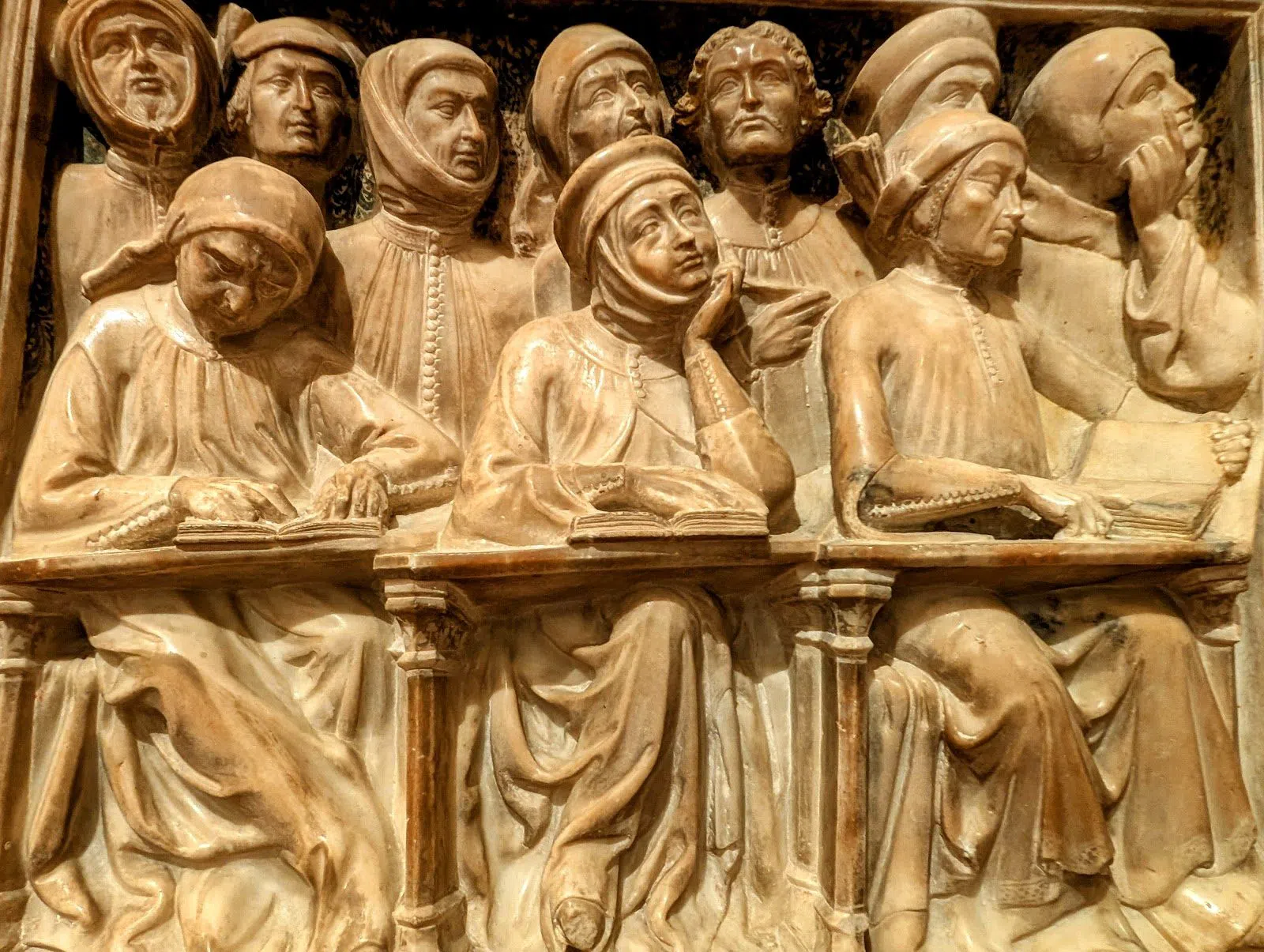
The Renaissance courtyard has a stub of the medieval city wall standing inside it. Vaulted stone halls follow, holding carved professor tombs that show Bologna doctors lecturing to rows of students, and brass bishops' effigies. The rooms are large enough for a guide to speak in. It closes Mondays, and the hours split between Tuesday and Thursday mornings and Wednesday and Friday afternoons, so check them before walking over.
Santo Stefano and Strada Maggiore

Basilica di Santo Stefano (Complesso delle Sette Chiese) is two minutes uphill from the loggia, free with a voluntary donation. Several brick church fronts join into one face at the top of a wedge-shaped sloping square. Inside, an eight-sided Lombard brick rotunda surrounds a raised stone basin, and beyond it lies a bare Romanesque courtyard of thin columns with carved capitals. It is a working Franciscan church: services take priority and the hours shift. Visiting runs Tuesday to Sunday, 09:30 to 12:30 and 14:30 to 19:00, with Mondays effectively closed.
Casa Isolani and Corte Isolani (Strada Maggiore) sit 150 metres from the Mercanzia, free and open through the day. Oak posts 9 metres tall with crutch-shaped braces hold up a 13th-century timber portico, probably the oldest surviving medieval portico in any European city. Three wooden arrows are still lodged in the boards of the ceiling. Behind the portico, a bent covered arcade of shops and courtyards cuts through to Piazza Santo Stefano. The pavement under the timber is shallow, so stand back against the posts.

Three minutes into the market lanes
Santuario di Santa Maria della Vita (the market lanes) is three minutes from the Mercanzia and holds Niccolò dell'Arca's Lamentation, six life-size terracotta figures screaming and recoiling around a dead Christ, drapery flying backwards as if in wind. Above them the interior opens into a high oval baroque space under a tall domed drum. There is an admission charge, reduced for parties of 10 or more. The chapel is cramped, so guides brief outside and send people in two or three at a time. It opens daily, including Monday.

Free interiors within five minutes
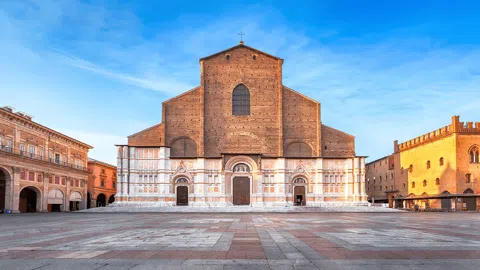
Basilica di San Petronio (Piazza Maggiore) is free to enter daily 10:00 to 18:00, and the attached museum is free as well. The facade is half finished, marble panels to waist height and bare brown brick above. Inside is a vast bare-brick Gothic nave with a 67-metre brass meridian line inlaid down the floor, crossed by a pinhole of sunlight at noon. The panoramic terrace has been permanently closed since the restoration finished, and occasional paid bell-tower and attic openings are the only way up. The nave does not allow loud guiding.

Biblioteca Salaborsa and the Roman excavations are free and open access. A glass floor sits under a tall iron-and-glass roof with galleried balconies, people read at tables, and the 2nd-century BC foundations of the Roman basilica of Bononia lie lit beneath their feet. Stairs go down into the dig itself. The excavations open Monday 14:30 to 19:00 and Tuesday to Saturday 10:00 to 19:00. This is the wet-weather slot, and it puts the merchant court's trading floor into a 2,000-year sequence.

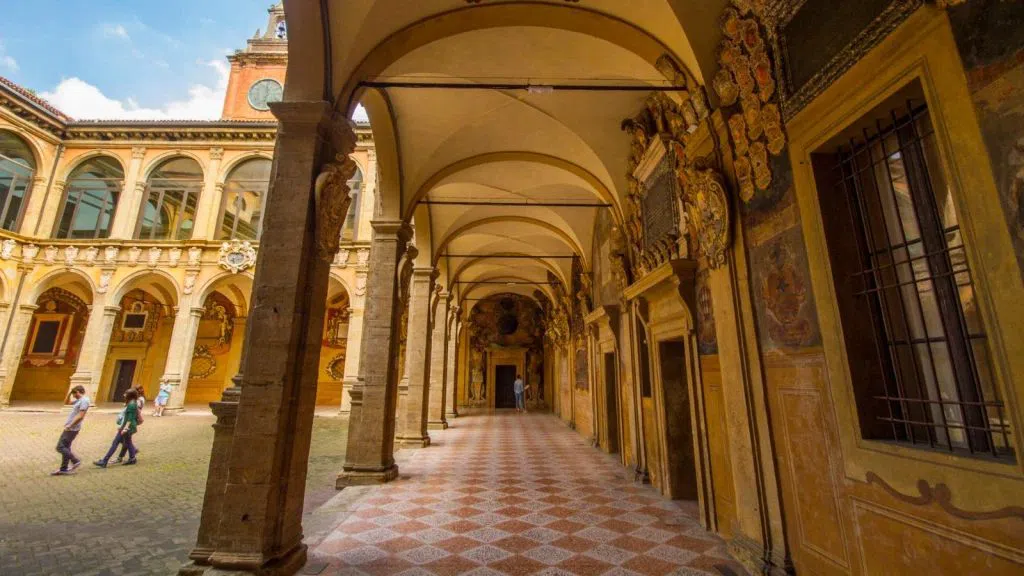
Palazzo dell'Archiginnasio and the Teatro Anatomico are a five-minute walk from the Mercanzia, and the courtyard is free, Monday to Saturday 09:00 to 19:00, closed Sunday. A long double loggia and its staircases are plastered floor to ceiling with thousands of painted student coats of arms. Upstairs, the spruce-panelled dissection theatre has tiered benches around a marble slab, and two skinless wooden spellati figures hold up the lecturer's canopy. The theatre costs €3 on its own and €10 with an audio guide. You must book the theatre and the Stabat Mater hall online, and the theatre holds only a modest standing group at a time.
Palazzo Pepoli on Via Castiglione
Museo della Storia di Bologna (Palazzo Pepoli, Via Castiglione) runs 2,500 years of the city that built the merchant court in the first place. The 14th-century palace keeps its crenellated brick front. Inside, a glass-and-steel crown atrium has been dropped into the old courtyard, and dark multimedia rooms follow with projected maps, a reconstructed Etruscan Felsina and talking-head screens. It opens 10:00 to 19:00, closes Tuesdays, and is booked through Bologna Welcome. The museum reopened under the civic museums after a closure and a change of management, and its hours have moved around since, so check them the same week you go.

Towers near the loggia
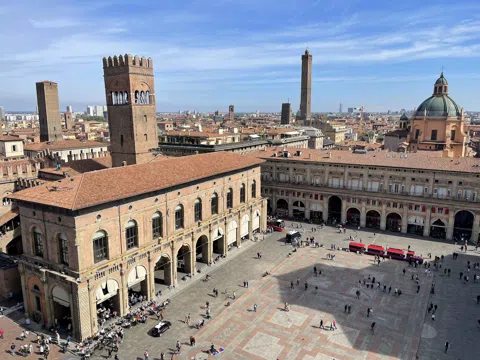
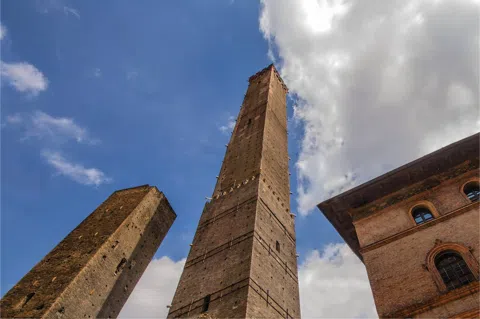
Torre dell'Orologio (Palazzo d'Accursio) is the city's working high view while the Asinelli climb is suspended. A narrow brick stair and a timber walkway pass the exposed 18th-century clock movement and come out on a tiny railed gallery, looking straight down the length of Piazza Maggiore and over San Petronio's roof to the hills. Entry is €10 full and €7 reduced, booked through Bologna Welcome, and advance booking is mandatory. Slots run three times an hour, on the hour, at :20 and at :40, with a hard headcount on each. A party of more than six is split across slots or booked as a block, and a group of six or more with a guide gets a reduced rate.

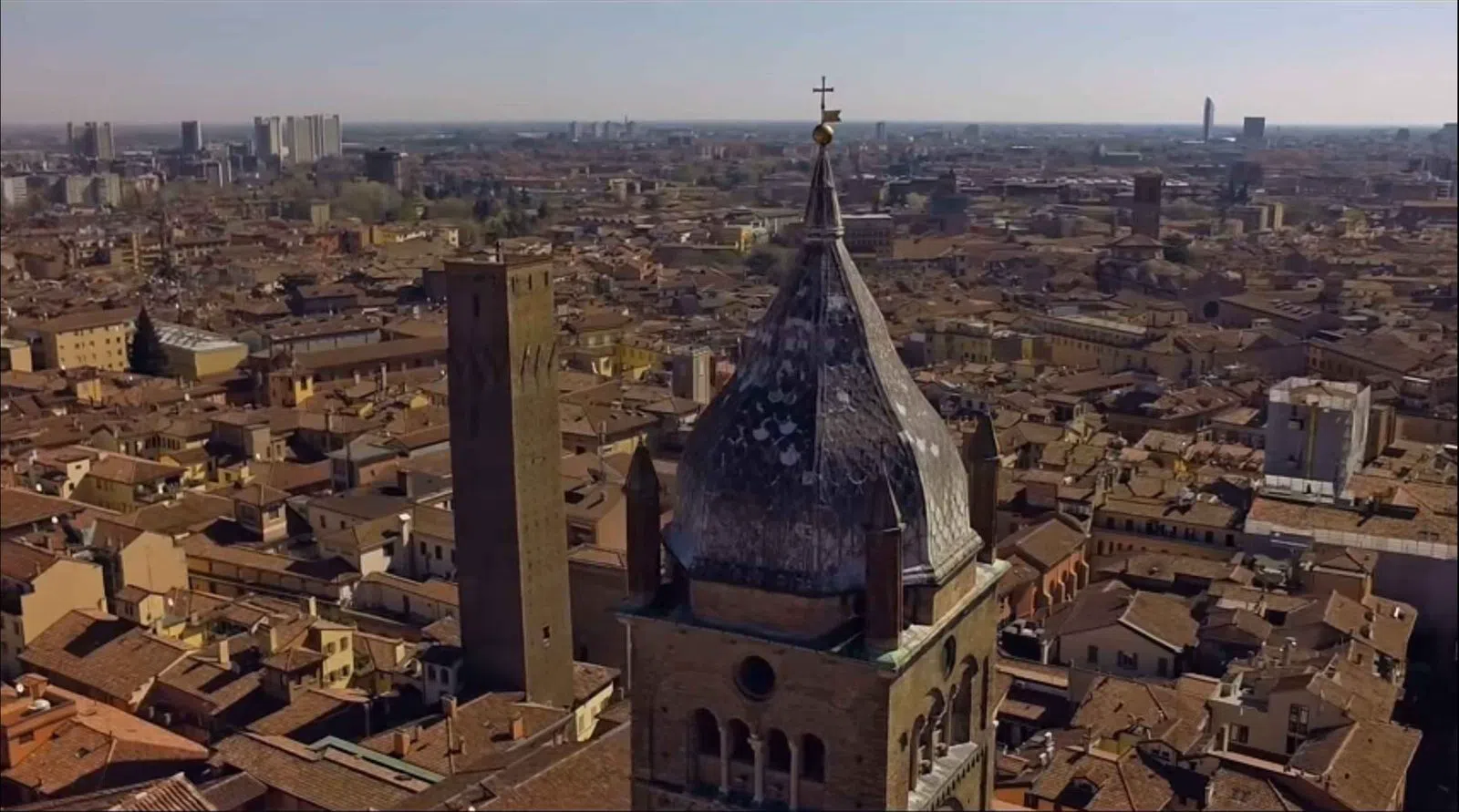
Torre Prendiparte (Torre Coronata) is five minutes from the Mercanzia, 60 metres of square brick with a crown-shaped notched top. Steep flights with a handrail join twelve tight floors, one level still scratched with graffiti from its years as an ecclesiastical prison, and the climb ends on an open roof above the terracotta rooftops. Entry is €10 full and €8 reduced, and under-10s go free with a family. Visits are weekends only, by reservation, at fixed hourly slots from 12:00 through 18:00, booked by phone, email or WhatsApp. The tower splits larger parties across slots.
Eating around the Quadrilatero
Mercato di Mezzo (Via Clavature and Via Pescherie Vecchie) is three minutes from the loggia, a 19th-century market building on three levels over 700 square metres. Iron columns and tiled counters carry mortadella boards, fried gnocco and beer taps under hanging lights, and the seating is communal high tables. They take no bookings, and it opens every day from late morning to midnight. It is noisy and shoulder to shoulder at Friday and Saturday aperitivo, so come early or off-peak.
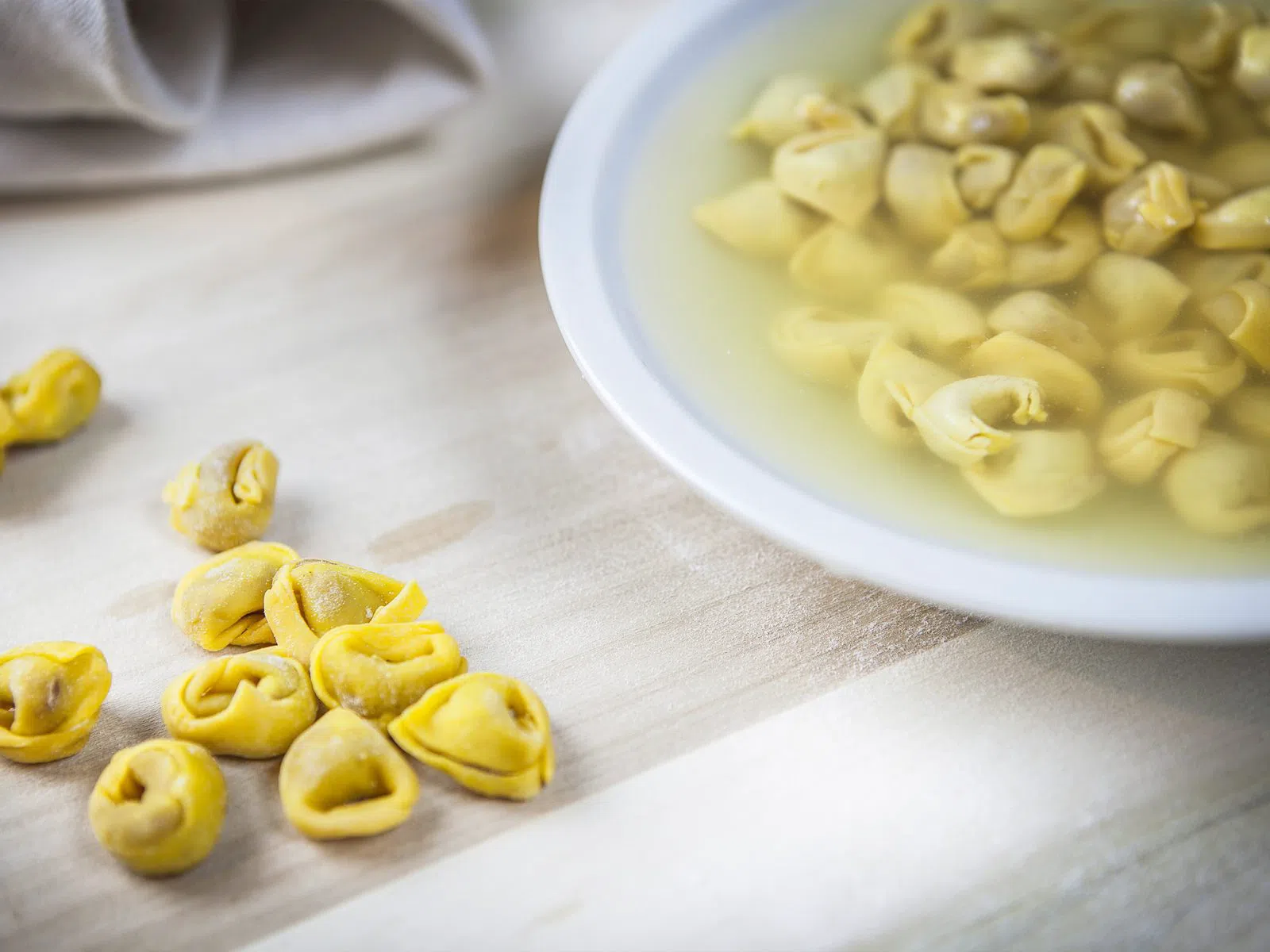
Antica Salsamenteria Tamburini (Via Caprarie) is 200 metres from the loggia, a corner shop hung with whole mortadellas and prosciutti over a long marble counter of fresh tortellini and cheeses, with a self-service hot-food room and wine bar behind it. The shop opens Monday to Saturday 09:00 to 20:00 and Sunday 10:00 to 18:30, and the wine bar and restaurant run from 11:30 to late, until 16:30 on Sundays. It sits firmly on the tourist circuit. The self-service format absorbs a small group without fuss.
Paolo Atti & Figli (Via Caprarie) has traded since 1868 and is still run by the same family across five generations. The Liberty-era shopfront has carved wood and painted glass panels with a bread-shaped brass sign over the door, and behind the glass sit trays of tortellini and tagliatelle, stacked torta di riso and crescente loaves. The shop is small, takes no bookings, and holds a handful of people at a time.


Osteria del Sole (Vicolo Ranocchi) has been documented since 1465 and pours only wine and beer. You buy food at Atti or the Quadrilatero counters and carry it in. Ask for food at the bar and you will be turned down. An unmarked door opens into a plain wood-panelled room with long shared trestle tables, a sun sign, and decades of football scarves and photographs on the walls, where locals play cards over paper cups of Sangiovese with their own food spread out in front of them. They take no reservations, and the shared tables suit a party of up to eight. Hours are Monday to Saturday 11:00 to 21:30 and Sunday 12:00 to 16:00.
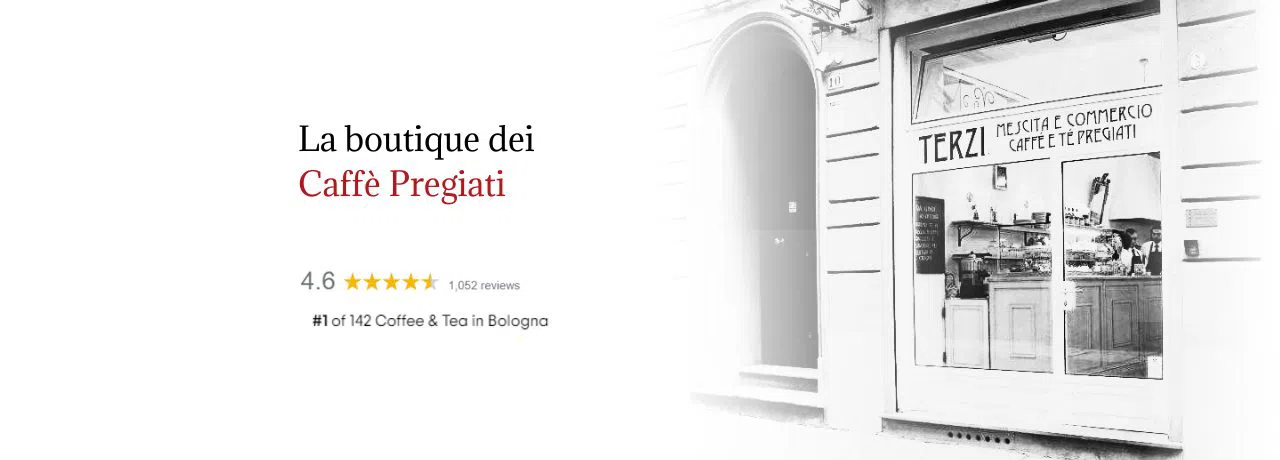
Caffè Terzi (Via Oberdan) is the serious coffee stop a short walk north of the Mercanzia. The bar is tiny dark wood with brass scales, glass jars of single-origin beans and loose-leaf teas shelved to the ceiling, a small roaster and hand-written tasting cards. Four or five people at the counter is the practical limit and there is no table service to speak of, so send a group in pairs. The hours change; ring ahead on +39 051 236470.
Is it worth it
The loggia on its own gives you a facade and a street corner. Pair it with the museum that holds its original statues and you get how trade in this city was housed and policed, which is the reason to come. It suits a visitor already walking the old centre in a group small enough to stand under the arches without filling the junction.
Best time to go
Put the merchant court in a weekday morning if you want to get past the arches, because that is the only window the offices open, and an appointment is required either way. Monday takes out the medieval museum and leaves Santo Stefano effectively closed, while Santa Maria della Vita opens anyway and the Salaborsa excavations open on Monday afternoon. Tuesday costs you Palazzo Pepoli, and Sunday closes the Archiginnasio courtyard. A weekend is the only chance at Torre Prendiparte.
Before you go
Three things need arranging in advance: the clock tower slot, the Anatomical Theatre and a weekday appointment at the merchant court. Everything else on this walk turns on which day you pick. See the Bologna guide and the Bologna hotel search.
Før du drar
Can you go inside Palazzo della Mercanzia?
Not as a ticketed visitor: the interior is the Bologna Chamber of Commerce, whose offices at Piazza Mercanzia 4 open Monday to Friday, 09:00 to 12:30, by appointment only. City culture programmes run occasional free guided openings capped at 25 people, and those fill quickly.
How long does the merchant court take?
Ten minutes, if you are standing under the loggia on your own. It takes longer when someone is there to explain the balcony, the guild crests and the 1384 customs house.
Do you need to book a small-group walk ahead?
Yes. The operator confirms the busiest small-group walk in this quarter by hand, which can take up to 48 hours, and flags it as likely to sell out. It runs seven days a week, so pick a date before you travel.
Is the building step-free?
The loggia is a public street corner. The step-free entrance for the interior is at Via Santo Stefano 1, which has a small ramp. Ring the porter on +39 051 6093 403 to arrange it.
Where are the statues from the facade?
The 14th-century originals from the Dalle Masegne circle, including the limestone Justice and the patron saints, are in the Museo Civico Medievale at Palazzo Ghisilardi-Fava, which closes on Mondays and opens Tuesday and Thursday mornings, Wednesday and Friday afternoons.